Tuesday, October 20, 2026 · Ocean Shipping & Ports
HMM to Add 114,100 TEU Across 12 Ships in $1.617 Billion Fleet Expansion
Noted by Christopher Johnson · 974 reads
HMM plans eight mainline ships and four feeders, adding 114,100 TEU by 2029 as it targets a more flexible fleet by 2030.
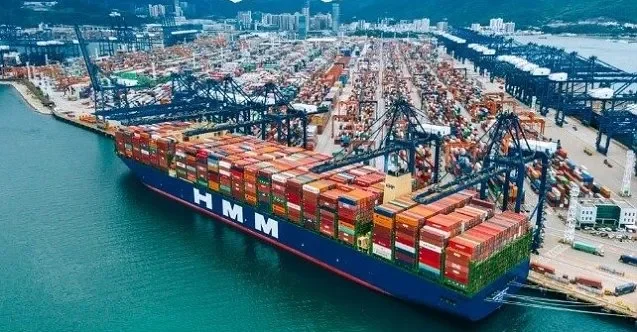
HMM is adding both mainline and feeder capacity in a KRW 2.17 trillion (about $1.617 billion) fleet expansion. The plan covers eight 13,000 TEU container ships and four smaller vessels acquired through resale transactions while under construction: three with capacity of 2,800 TEU and one of 1,700 TEU. Together, the 12 ships will add 114,100 TEU to the South Korean carrier’s fleet, with deliveries scheduled to finish by the end of December 2029.
The mix points to a fleet plan built around different parts of the network. The 13,000 TEU ships expand deep-sea capacity, while vessels ranging from 1,700 to 2,800 TEU can serve feeder routes and smaller port calls. HMM’s plan pairs those roles, giving it more scope to connect regional services with mainline routes as ships enter service.
A broader fleet target
The orders support HMM’s revised medium- to long-term plan, which sets a 2030 target of 166 container ships with combined capacity of 1.47 million TEU. The same plan calls for a bulk carrier fleet of 110 vessels with 13.52 million deadweight tons of capacity.
HMM’s earlier container target was 130 ships totaling 1.50 million TEU. The revised goal therefore envisages more container ships but slightly less aggregate capacity. That shift suggests the company is placing greater weight on vessel numbers and the ability to match ships to routes, rather than pursuing fleet growth chiefly through larger vessels.
Vessel count and total TEU describe different aspects of the plan. A higher count gives a carrier more individual ships to assign across its network, while aggregate capacity measures the space those ships provide. The combination matters for service design: mainline ships can carry large volumes between major ports, and smaller vessels can connect those routes with regional destinations. HMM has said it intends to use a hub-and-spoke network to develop its deep-sea and short-sea services.
What the ship mix could mean for service options
For freight forwarders and shippers, the additional feeder capacity could matter most where cargo moves through regional connections or smaller ports. More feeder ships may give HMM additional options for linking those ports to its mainline network. The actual effect will depend on where the company assigns the ships, which services they join and how their schedules connect with larger vessels.
That makes the delivery timeline only one part of the picture. A ship’s capacity becomes useful to customers through its deployment: the ports it serves, the route it follows and the connections it offers. As the vessels arrive through 2029, HMM’s route decisions will show where the added space enters the network and whether the smaller ships expand coverage on particular regional services.
The source material identifies Southeast Asia, the Middle East and Latin America as regions where trade growth is continuing. In those areas, feeder and mid-sized vessels can help extend service to smaller ports and move cargo through regional transshipment connections. The potential benefit is wider port coverage and more ways to route freight; the practical value for an individual shipper will depend on the origin, destination and cargo profile involved.
Capacity timing remains a market factor
HMM’s expansion comes as major container carriers, including Maersk, CMA CGM and MSC, have also ordered large and very large ships. The global orderbook has risen to a historically elevated share of existing fleet capacity, according to the source article. That creates a timing question for the liner market: what demand will be available to absorb new capacity as ships are delivered?
Analysts cited in the source say concentrated deliveries around 2029 could put renewed pressure on carriers’ ability to absorb capacity if global trade does not grow at a matching pace. HMM’s order combines mainline ships with feeders, which could give the company more deployment choices across vessel sizes. That flexibility may help it respond to differing route needs, though it does not remove the broader market’s exposure to a large wave of new ships.
For freight buyers, the near-term takeaway is to track HMM’s deployment plans alongside the arrival schedule. Changes in route coverage and feeder connections could affect available booking options on intra-Asia and deep-sea services, particularly for cargo moving through small and medium-sized ports. Shippers can assess those developments against their own destinations and cargo types; the order alone does not establish how rates or schedule reliability will change.
By the end of 2029, HMM plans to have added 114,100 TEU through this package. The operating impact will become clearer as each ship is delivered and assigned, with route choices determining how much of the added capacity reaches the services and ports that customers use.


