Friday, October 23, 2026 · Trucking & Freight
Grote Routes Trailer Camera Video Through Standard J560 Connector
Noted by Deborah Lockridge · 699 reads
Grote’s next-generation 4See camera sends video through the existing seven-way connection, with potential for multiple feeds and trailer condition data.
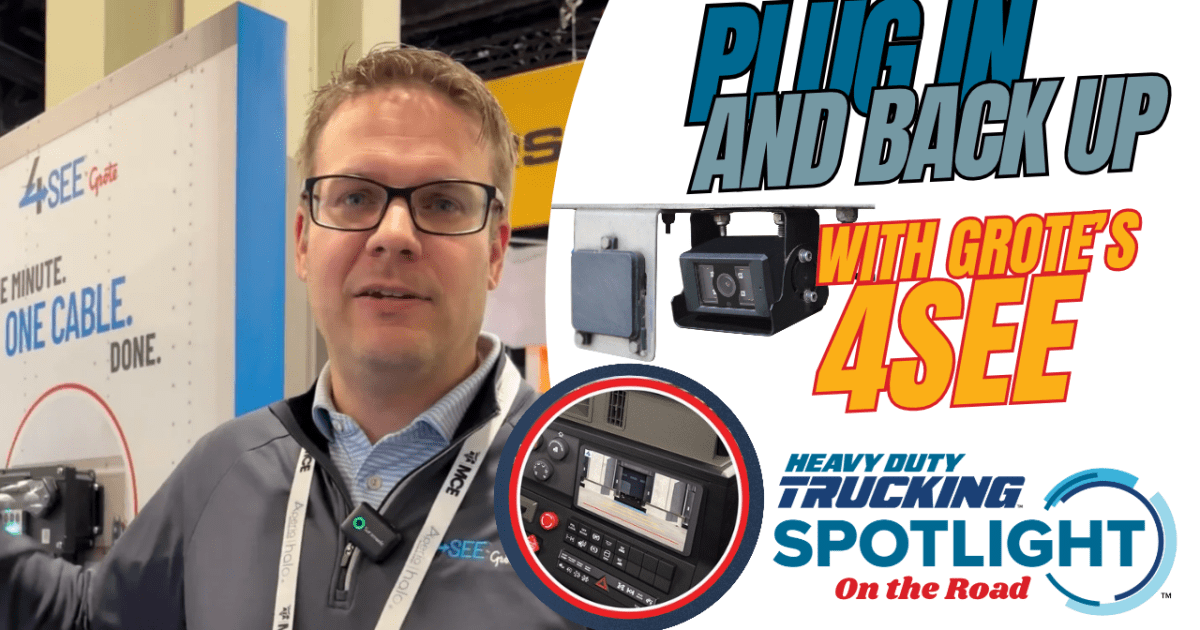
Grote Industries is working to bring trailer camera video into the cab through the standard J560 seven-way connection, avoiding the need for a separate wireless pairing or an additional cable. The approach centers on the company’s next-generation 4See rear-view camera and new data-transfer technology.
That matters operationally because camera systems depend on more than the camera itself: the video has to reach the driver in a usable way, and the connection has to work across the tractor-trailer setup. Grote’s approach aims to carry that data through a connector already used between tractor and trailer. It could give fleets a way to add camera capability without introducing another connection to install and maintain.
Using the existing connection
At the American Trucking Associations’ 2026 Management Conference & Exhibition, Grote’s Adam Slade demonstrated the system to HDT’s Deborah Lockridge. Slade explained how the company uses the J560 connection to transfer video and why Grote believes the connection has room to carry substantially more data.
The source describes the central idea but doesn’t provide technical specifications for the transfer method, image quality, latency, installation process or compatibility requirements. Those details matter to fleet teams assessing a system: they help show what equipment is needed, what conditions affect performance and how the setup fits a mix of tractors and trailers. The demonstration establishes the intended path for the video, while leaving those implementation questions open.
Using the existing connector also gives the proposal a different shape from systems that rely on wireless pairing or a separate cable. Each method has its own installation and upkeep considerations. A wireless setup requires the devices to connect; another cable adds a physical component that must be installed and maintained. Routing video through the seven-way connector is intended to avoid those additional steps, though the source doesn’t describe what changes, if any, fleets would need to make to their current equipment.
More than a rear view
Grote sees possible uses beyond a single rear-facing camera feed. Slade discussed the potential to support multiple camera feeds, as well as information about tire and lighting conditions. For fleet operators, that points toward the connector serving as a channel for several kinds of trailer data rather than video alone.
The practical value will depend on what information the system can carry, how drivers and maintenance teams receive it, and which components must be installed on the tractor and trailer. The source doesn’t specify how multiple feeds would be displayed or prioritized, or how tire and lighting information would be gathered. Those questions will shape whether the system fits particular operating needs, such as giving drivers additional views or helping teams identify trailer conditions.
Two-way communication is another capability discussed in the demonstration. Grote described potential support for trailer lighting and backup alarms. That suggests information could travel between tractor and trailer in both directions, although the source doesn’t detail the commands, alerts or operating scenarios involved. For fleets, the distinction is significant: a connection that carries data both ways could support functions beyond sending a camera image toward the cab.
What fleets still need to learn
Grote’s presentation describes a direction for its next-generation 4See camera, not a full set of purchasing or deployment details. The source identifies the standard seven-way connector as the path for video, but gives no performance figures, product pricing, installation requirements or fleet availability date. It also doesn’t state when Grote plans to release the technology; the video covers that release timing, but the supplied article doesn’t provide the answer.
For fleet managers comparing camera options, the useful next details will be practical: what equipment is required at each end of the connection, how the system handles different trailer configurations, and whether the added data functions work with existing components. The source doesn’t answer those questions, so teams evaluating the approach will need product specifications before judging deployment costs or fit.
The core proposition is straightforward: Grote wants the J560 seven-way connector to carry trailer video and potentially other data, using a connection already present in tractor-trailer operations. If the system’s operating requirements and performance meet fleet needs, it could reduce the need for separate video connections while opening a path to additional trailer information. The release timing and implementation details remain key items to watch.


