Tuesday, October 20, 2026 · Ocean Shipping & Ports
Lunar Society Lessons Put Supply Chain Process Ahead of Automation Hype
Noted by Martijn Graat · 384 reads
David Mindell argues that better processes, transport networks and maintenance matter as much as automation in building resilient supply chains.
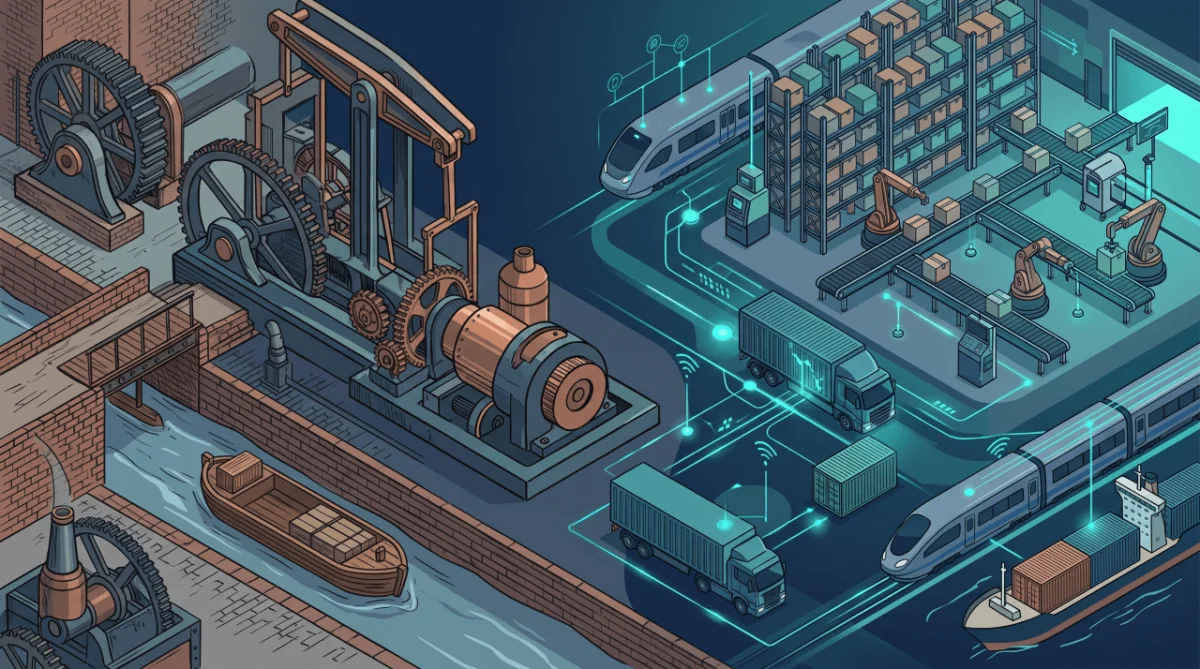
The Lunar Society’s industrial legacy offers a useful prompt for logistics leaders: productivity depends on how goods are made and moved, not just on the machines used to do the work. In a conversation with Martijn Graat on the Logistics Matter podcast, David Mindell points to the 18th-century group as an example of people who connected invention with changes to transportation, production and markets.
That emphasis has practical weight today. Supply chains can add automation and still struggle if their underlying processes are fragile. Mindell’s argument is that leaders should look beyond new equipment and software to the systems that keep production, freight movement and maintenance working together.
Innovation meant changing the system
The Lunar Society met during full moons and included James Watt, Matthew Boulton and Josiah Wedgwood. Its members are associated not only with products and inventions, but also with broader industrial changes: building canals, transforming raw materials and developing new approaches to marketing. The podcast discussion presents their work as a reminder that industrial growth relies on connecting technical ideas to the movement and handling of goods.
For modern operators, that connection is easy to lose amid attention to individual technologies. A new machine may raise output at one step, for example, while creating a different requirement elsewhere in the process. Transportation, material handling, equipment upkeep and production schedules all shape whether a technical improvement produces a practical gain across the operation. That is why process innovation deserves attention alongside automation investment.
Mindell frames transportation and process improvement as engines of industrial growth. Applied to logistics, that perspective directs attention to how work flows between facilities and teams: where materials enter a process, how they are transformed, and how finished goods reach their next destination. The source discussion doesn’t prescribe a single operating model. Its point is that improvement comes from examining those links, rather than assuming the newest technology will resolve wider constraints on its own.
Automation still depends on human work
Mindell challenges the idea that physical automation should be judged chiefly by whether it replaces workers. He describes a productivity gain in which one person uses 10 machines to do work that would otherwise require 10 people. But he pairs that example with a broader condition: industries need to keep creating new kinds of work and jobs that build on human intelligence.
For managers, that view makes the question larger than a machine’s output. They also need to consider how people will operate, maintain and improve automated systems, and what new work may grow around the capabilities those systems create. The source provides no figures for costs, staffing or productivity, so it doesn’t support a numerical comparison. Instead, Mindell’s point is about how leaders think through automation: treat it as part of industrial development, with people still contributing to the work that follows.
That matters in facilities where equipment and software are only pieces of a larger operating process. If an automated step changes the pace of work, the surrounding tasks may need attention too. Teams can use that kind of review to identify where a technology supports the operation and where changes to procedures, skills or upkeep may be needed. The value lies in understanding how the parts fit together, not in treating a new system as a result in itself.
Resilience starts with routine operations
The discussion also points to the COVID-19 port congestion crisis and to maintenance and repair as areas that deserve more attention. Mindell’s broader case is that resilience depends on systemic health: the condition of the processes and physical assets that enable goods to move. Maintenance may attract less notice than a new automation project, but neglected equipment and weak operating processes can limit the benefit of new technology.
That does not make maintenance a substitute for innovation. It makes upkeep part of the operating foundation on which innovation depends. A team assessing a technology change can also examine how equipment will be maintained, how work will be handled around it and whether the process supports reliable movement through the operation. The source doesn’t set out specific maintenance practices or quantify their effect, so the practical lesson is one of focus: include care for existing systems in discussions about future capability.
The same logic applies when assessing disruption. The article identifies port congestion as an example of supply chain strain, while the podcast’s wider argument encourages leaders to consider the system behind the visible blockage. For logistics professionals, that means examining the processes that connect transport, production and maintenance when weighing resilience. The source does not detail the causes or scale of the congestion, so it offers no basis for drawing more specific conclusions about that episode.
A builder’s mindset for logistics
Mindell’s central challenge is to shift attention from high-tech excitement toward the work of building and maintaining effective industrial systems. The Lunar Society provides a historical frame for that idea: its members connected inventions with transport networks, material transformation and marketing. The comparison doesn’t make their circumstances identical to those facing logistics businesses now; it highlights the continuing value of linking technical advances to the practical systems that support them.
For leaders weighing technology and operational improvements, the useful questions are concrete. What part of the process changes? How will that affect the movement of materials and goods? What maintenance will the new equipment need, and what roles will people perform as the operation changes? Those questions keep technology tied to the work it is meant to support.
The conversation’s takeaway is that resilient industrial growth requires both new capabilities and attention to the processes around them. Automation can raise productivity, while maintenance, transportation and human intelligence help sustain and extend that gain. Teams evaluating their next improvement can start by looking at the whole flow of work—and by making sure the systems that carry it are built to keep working.


