Tuesday, October 27, 2026 · Warehousing & Fulfillment
Jungheinrich Pairs Electric Truck Launches With Warehouse Power Planning
Noted by David Priestman · 688 reads
New EFG and ETV trucks bring visibility, ergonomic and lifting changes, while Jungheinrich helps warehouses plan charging and power use.
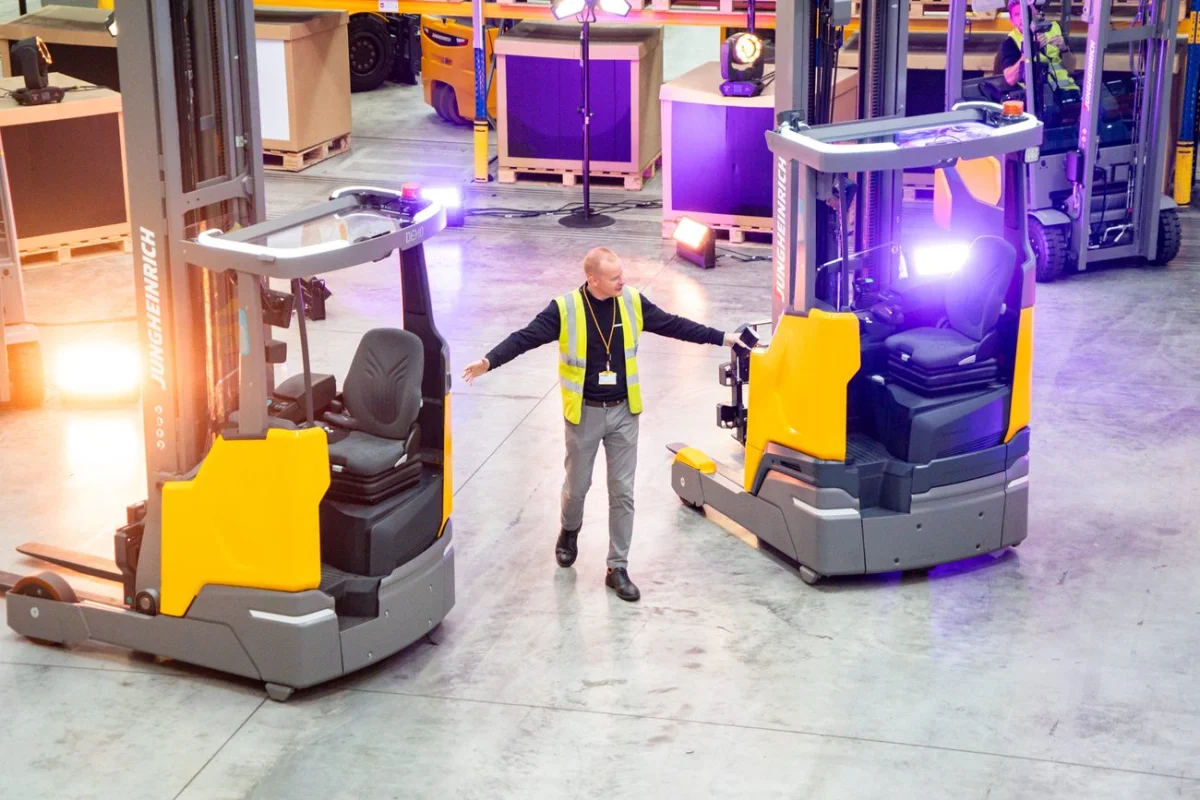
For warehouses considering electric truck fleets, the vehicle choice is only part of the decision. Available site power, charging windows and daily operating patterns all shape what equipment can run reliably. At Jungheinrich UK’s solutions showcase in Warrington, the company presented new counterbalance and reach trucks alongside an energy planning service designed to help customers fit charging into their operations.
Traditional forklifts, reach trucks, very narrow aisle trucks and pedestrian warehouse vehicles still have a substantial role, even as automation and robotics advance. Retail warehouses and third party logistics operators remain major users. Jungheinrich said its sales are split fairly evenly between lithium-ion and lead acid powered trucks.
Visibility and safety features on EFG trucks
The EFG 2 and 3 series electric counterbalance forklifts are central to Jungheinrich’s range. A patented, slim A-frame is intended to improve the operator’s view. The cab also adds leg room, an adjustable steering column that moves up, down, in and out, and an arm rest that can be adjusted to suit the driver.
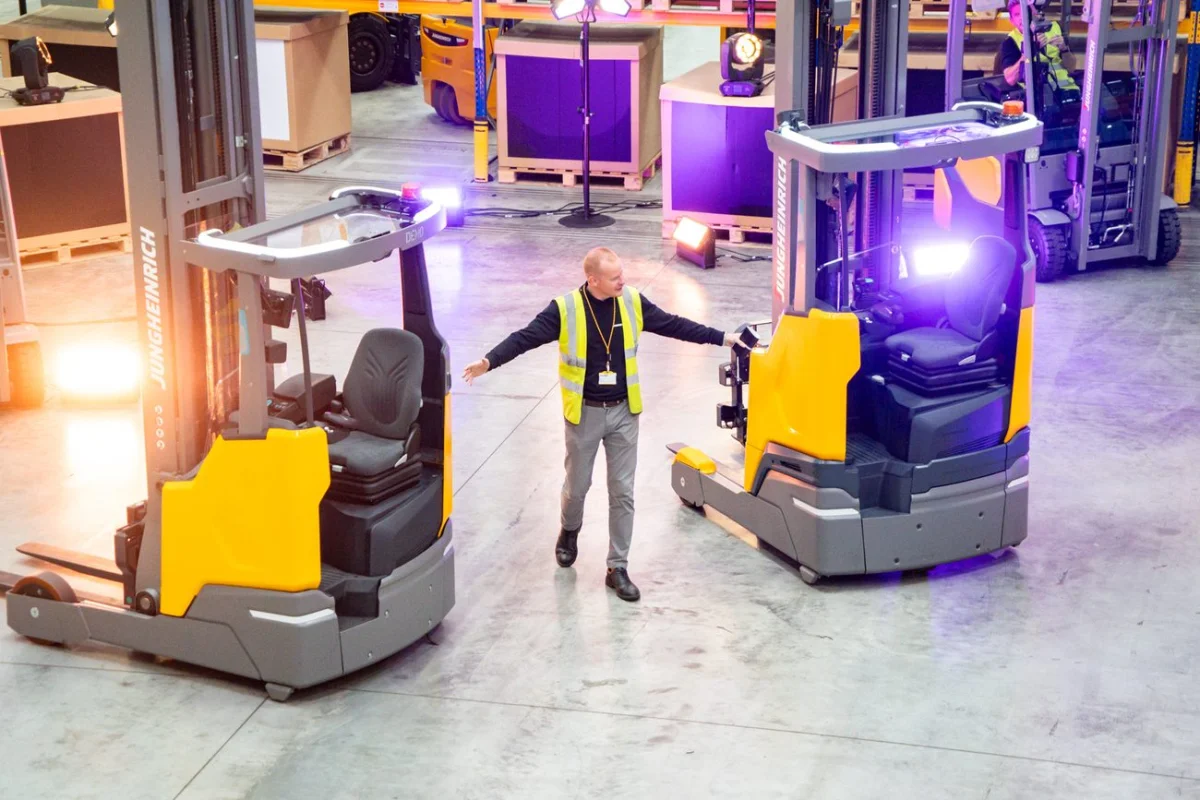
The EFG display now sits at eye level. An optional 12 mm polycarbonate roof combines strength with transparency, allowing more light into the cab and giving drivers a clearer view overhead. Automatic fork levelling keeps the mast vertical, with the system accounting for the truck’s position on surfaces that may not be level.
A rear camera can distinguish people from solid objects. When it detects a person, the truck switches to a slower “red zone” mode. Those features sit alongside measures highlighted at the event by Rob Fisher of the UK Material Handling Association: pedestrian detection, speed control, cameras, access control, impact monitoring, rack protection and truck telematics. Fisher said Britain still records 1,500 serious injuries from forklift accidents each year, despite stringent legislation and full investigations. He argued that safe driving should be rewarded and described safety as an investment.
Planning electricity around warehouse operations
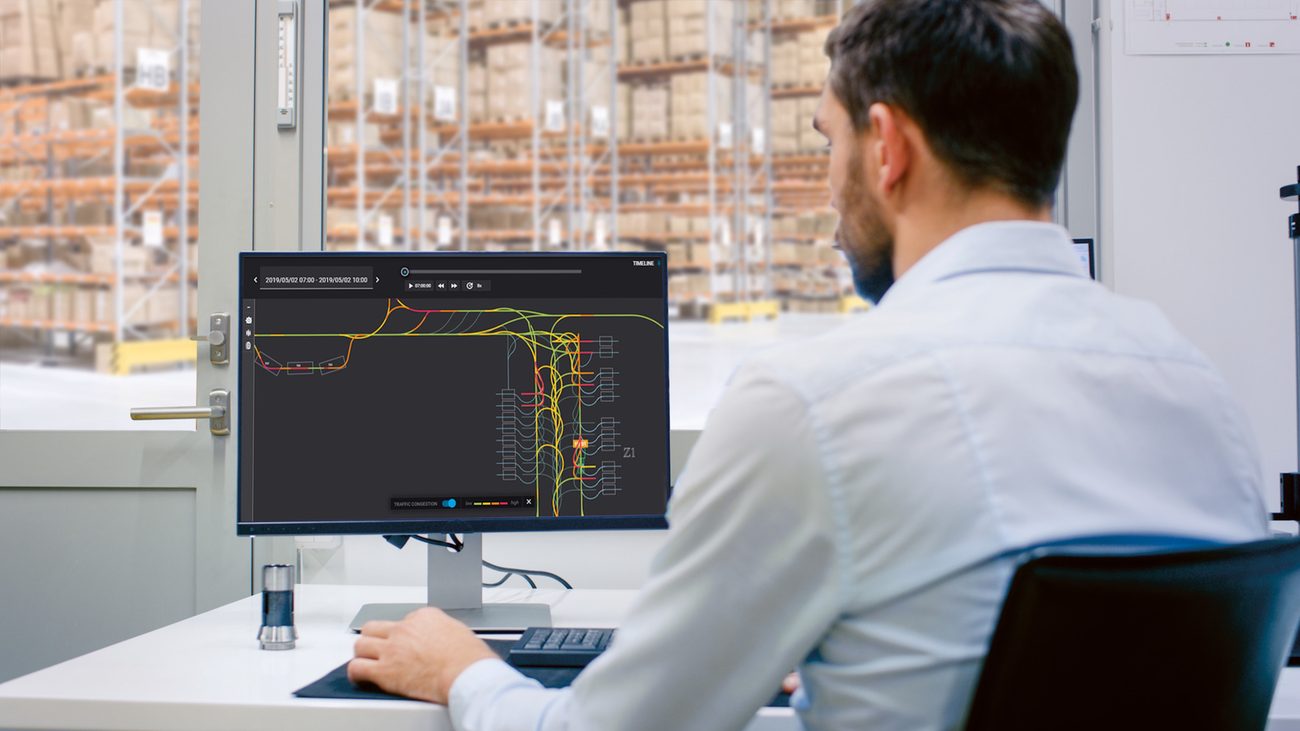
Jungheinrich has set up a separate energy department to advise customers on power infrastructure at both new and existing sites. Energy Infrastructure Manager Luke Gardner works with customers to assess what their operations need and what the site can support. The company’s National Sales Director, Tim Marriott, said power availability has become a central part of fleet discussions: customers need the right power at the right time, so energy specialists should join planning early.
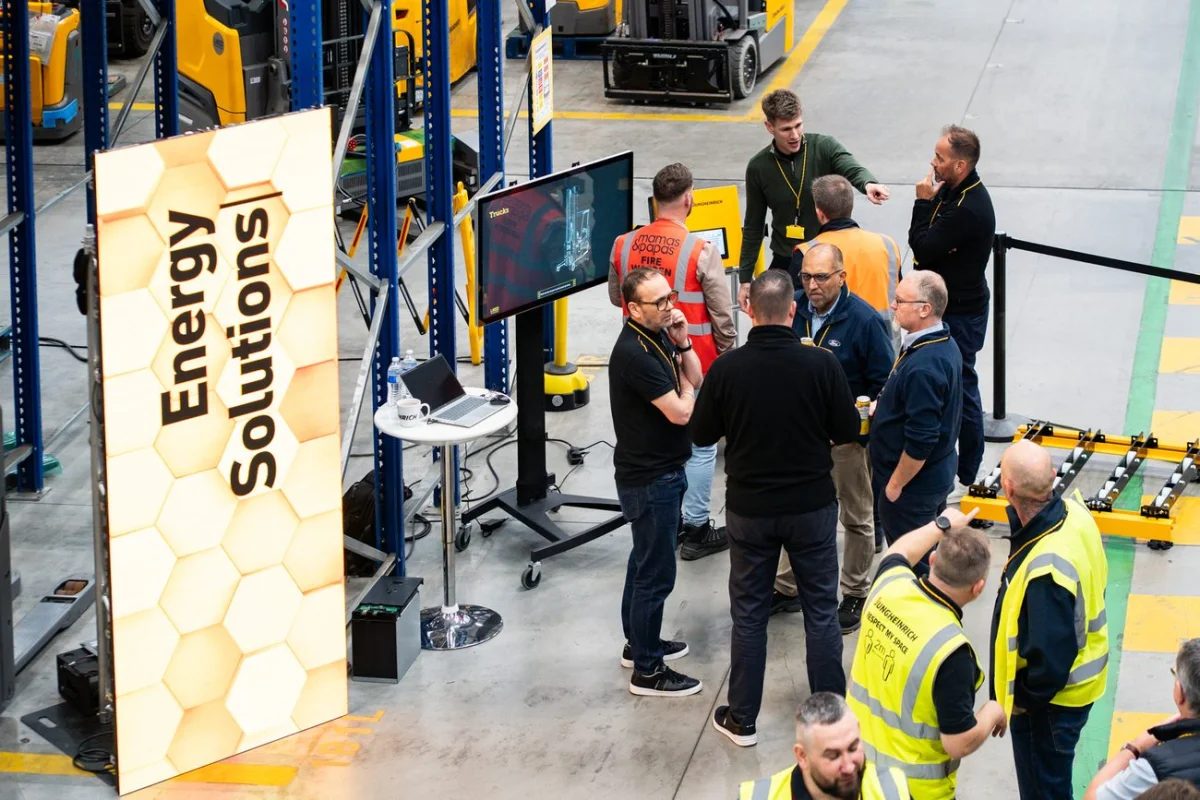
Each warehouse has a set level of incoming power controlled by the grid. Gardner’s team divides site use among electric car and commercial vehicle charging, lighting, offices and materials handling equipment. It then models demand against the customer’s schedule, whether that means a three-shift, round-the-clock operation or two shifts on five days a week. The aim is to establish what is feasible before equipment and infrastructure decisions are made. Gardner said energy efficiency can help Jungheinrich win contracts.
That planning can change how customers think about charging. Gardner said vehicles generally don’t need to receive a maximum charge at every opportunity; charging enough to cover a shift or reach a break may be sufficient. Team briefings and other breaks can provide charging windows, and he said it is rare for every machine to be plugged in at once.
Depending on the size of the distribution centre, materials handling equipment could account for 50% or 60% of total power use, Gardner said. When a system is handed over, Jungheinrich manages consumption by considering shift patterns, battery choices, chargers and site infrastructure together. Charger selection matters because chargers draw substantial power.
An energy management system communicates with chargers and sets operating limits. It can adjust charging levels, reduce power demand and coordinate with a site’s solar system. Jungheinrich is also exploring energy storage away from the grid, as battery costs have fallen. Gardner said daytime solar generation could supply automated operations overnight.
ETV reach trucks target faster pallet handling
Jungheinrich’s new ETV reach truck range marks 70 years since the company built its first reach truck in 1956. The new 2i, 3i and 4i models are available with lead acid or lithium-ion batteries. A separate integrated lithium-ion option uses no derivative products and comes in a more compact chassis, while retaining the same lift height and offering a narrower turning circle.
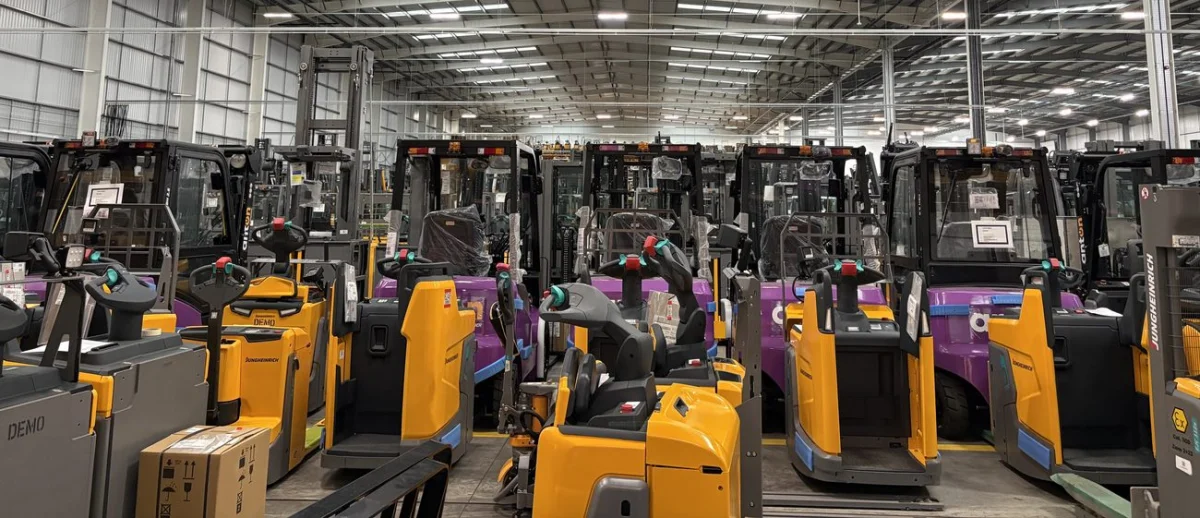
The ETV can lift to 8.6 metres, with a maximum fork lifting speed of 1.2 metres per second. Faster lifting can help operators pick more pallets per hour. For workers who repeatedly get on and off the truck to label goods, remove shrink-wrap or make quick checks, the ETV2i’s 42 cm step-on height reduces the climb into the cab and leaves more room inside.
Service keeps customers returning
Customer service is another part of Jungheinrich’s sales approach. National Customer Services Director Karen Taylor-Ronson, who has spent 26 years with Jungheinrich UK & Ireland, estimated that recurring business and renewals account for 80% of turnover. She said much of the company’s customer loyalty comes from service after the initial contract stage. Most truck contracts, she said, are either five-to-seven-year leases or 12-month capital expenditure purchases.
Jungheinrich gathers feedback through customer relationship and transactional surveys, as well as area sales managers. Its global CARE customer centricity platform feeds results into a dashboard for review. After an engineer visits, the customer receives a survey; transactional feedback can also create tickets that are routed to the relevant team. Taylor-Ronson said both very positive and poor experiences are more likely to be reported, leaving the company focused on delivering consistent service in day-to-day interactions.
The broad product range gives account teams opportunities to add safety and fleet management systems where they suit customer needs. Fleet management software gives managers safety and usage information, while remote diagnostics can identify a truck problem and signal that it needs service before the customer reports it. Customers buying automation are also more likely to purchase warehouse management software from Jungheinrich than customers buying trucks alone.
Managing Director Stephen Saunders said customers are looking to raise productivity, use space more effectively and strengthen safety while controlling costs. The practical test for Jungheinrich’s approach is whether truck design, site power planning and service can be matched to each warehouse’s actual shifts and workloads.