Wednesday, October 28, 2026 · Trucking & Freight
Uzbekistan Builds Rail and Multimodal Links Across Eurasian Freight Routes
Noted by Tamishra · 355 reads
Rail projects, logistics centres and digital transit procedures are widening Uzbekistan’s freight connections across Central Asia and the Caspian region.
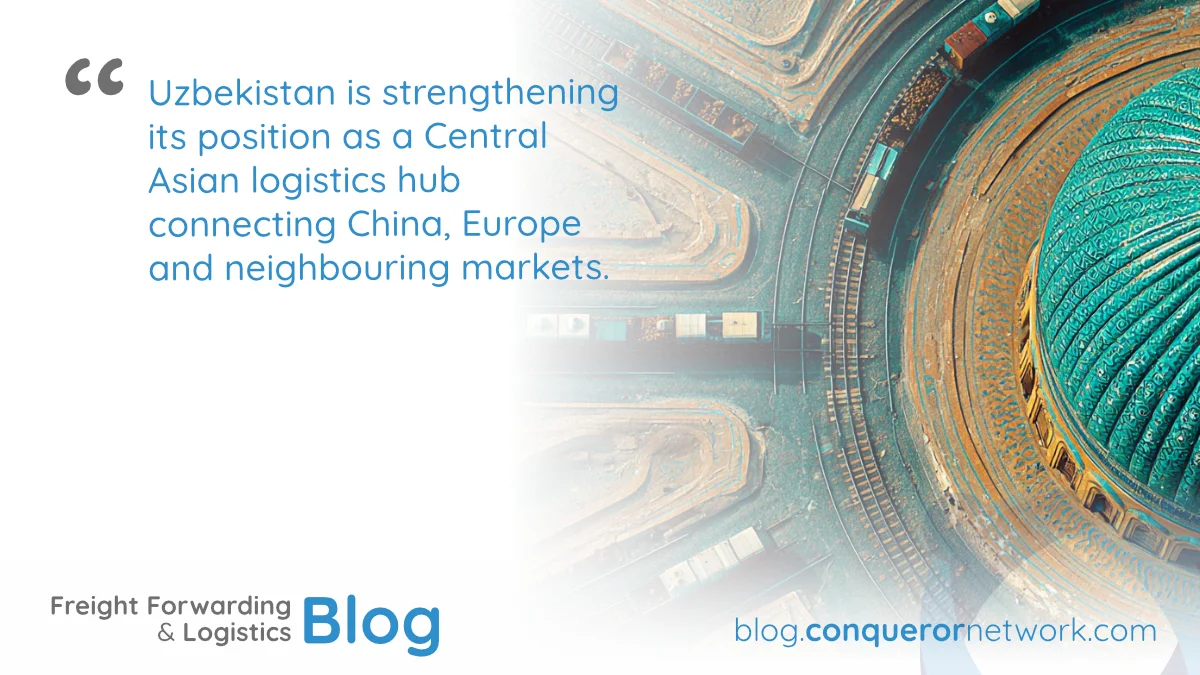
Uzbekistan is building connections between several regional freight networks, giving shippers and forwarders more ways to move cargo across Central Asia and toward the Caspian Sea. Its role in the wider Middle Corridor depends on rail links, logistics facilities and coordination across transport modes, with proposed projects potentially adding routes toward China and South Asia.
The Middle Corridor, also called the Trans-Caspian International Transport Route, links China with European markets through Kazakhstan, the Caspian Sea, Azerbaijan, Georgia and Türkiye. Cargo typically travels by rail across China and Kazakhstan, crosses the Caspian by vessel, then continues through the South Caucasus toward Europe. For businesses seeking additional routing options between Asia and Europe, the corridor offers another path alongside established northern routes.
A regional hub beyond the main route
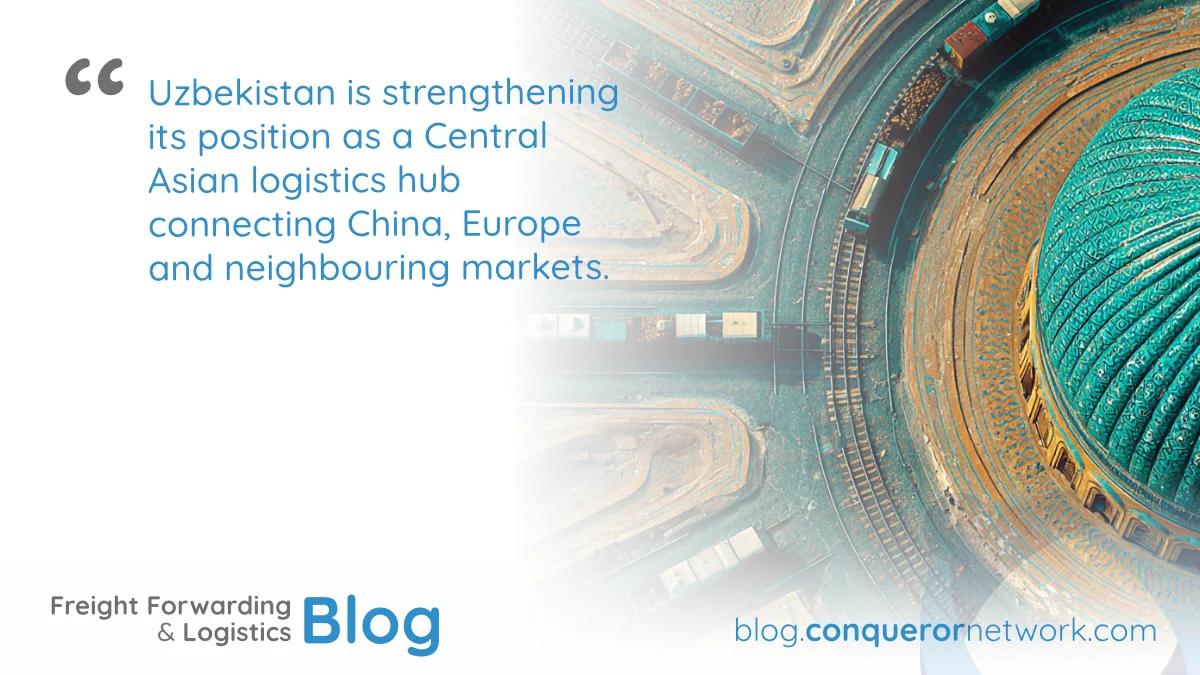
Uzbekistan is landlocked and does not sit directly on every leg of the Trans-Caspian route. Its location, rail connections and relationships with neighbouring markets can nevertheless link cargo to the corridor through regional feeder routes. The country is seeking to strengthen connections with Kazakhstan and other neighbours, while developing logistics infrastructure that can support consolidation, distribution and transit.
The scale of the network helps explain the focus on rail. Uzbekistan has approximately 4,700 kilometres of railway, and investments are aimed at increasing capacity, improving transit efficiency and strengthening international connections. One major project, the China–Kyrgyzstan–Uzbekistan railway, is expected to create a more direct rail link between China and Uzbekistan through Kyrgyzstan. It could reduce reliance on existing routes and open additional options for regional freight.
Once operational, the line could improve access to Chinese manufacturing centres and provide onward connections toward Central Asia and the Caspian region. The project is also expected to support container movements and encourage logistics facilities along the route. A separate proposed Trans-Afghan railway would link Uzbekistan with Afghanistan and Pakistan, creating a possible connection to Arabian Sea ports. That project remains under development.
Together, the plans point to an effort to connect several regional networks. For forwarders, the practical effect will depend on which links become available, the capacity they offer and how well they connect with existing services.
Transfers make coordination central
The Middle Corridor requires coordination across rail terminals, Caspian ports, vessels and roads. A shipment may involve several handoffs, so schedule alignment, equipment availability and communication among transport providers all affect how reliably cargo moves. The route’s multimodal nature creates work for forwarders able to manage the full journey rather than book a single transport leg.
- Rail can carry containers and general cargo between China, Kazakhstan and Central Asian destinations.
- Vessels connect Caspian ports, including Aktau and Kuryk in Kazakhstan, with Alat Port in Azerbaijan.
- Road freight supports first and last mile movements, regional distribution and cross-border deliveries.
- Air freight can serve urgent, high-value or time-sensitive shipments through cargo hubs such as Tashkent and Navoi.
Uzbekistan’s developing logistics centres and dry ports can support container handling, temporary storage, consolidation and transfers between modes. Those facilities matter because a route’s usefulness depends on how cargo moves between its separate legs, as well as on the links themselves.
Digital transit procedures target border friction
Infrastructure alone cannot determine transit times. Shipments crossing several countries also encounter different documentation systems and border procedures, and gaps in information sharing can slow handoffs. Uzbekistan is pursuing digitalisation and regional coordination to simplify some of these processes, including through electronic transport permits and digital transit procedures.
In July 2026, the International Road Transport Union reported the successful use of electronic TIR procedures across the Caspian Sea involving Azerbaijan, Turkmenistan and Uzbekistan. The operation demonstrated how digital transit tools can support coordination between countries and transport modes. Forwarders planning these movements need to track the documentation and transit requirements that apply along each shipment’s route.
Where forwarders may find business
Expanded links across Central Asia give forwarders additional lanes to consider for China–Europe cargo and regional distribution. Uzbekistan’s connections with Kazakhstan, Kyrgyzstan, Tajikistan and Turkmenistan can also support cross-border rail and road movements. For customers, access to capable local partners can make it easier to assess routing options and coordinate shipments across multiple markets.
There may also be demand for services involving project cargo, machinery, agricultural products and containerised freight as industrial activity grows across the region. Each category can require different equipment, handling arrangements and transport planning. Forwarders with local knowledge can help identify suitable providers and manage the details of cross-border movements.
For companies entering Central Asian markets, a network of regional agents can be as important as access to transport infrastructure. Local contacts can offer knowledge of carriers, facilities, border processes and business practices. That expertise is especially useful when a shipment involves several operators and handoffs.
International contacts for Tashkent forwarders
Forwarders based in Tashkent seeking overseas coverage can use professional networks to find agents in markets along likely shipment routes. Conqueror Freight Network describes a membership network spanning more than 250 cities in 140 countries. Connections with agents in China, Azerbaijan, Georgia, Türkiye and Europe could help members coordinate imports, exports and cross-border freight.
The network also offers members a way to exchange business enquiries and meet at its annual gatherings. For a forwarder, the value of such contacts depends on whether they can support specific lanes and customer requirements. Schedule a call with the network team.
Uzbekistan’s transport links are expanding, but the Middle Corridor still requires capacity, reliable transfers and coordination among providers. Forwarders assessing the opportunity will need to match available routes and partners to each shipment’s origin, destination and service needs. The country’s rail projects and logistics facilities could broaden those choices as the connections develop.
Related reading: Uzbekistan’s logistics push aims to turn transit growth into revenue. Learn more about the Middle Corridor and the proposed Trans-Afghan railway.
The original post appeared on Conqueror Blog, which covers freight forwarding and logistics.


