Monday, October 12, 2026 · Trucking & Freight
Four Fleets Report Safety and Compliance Results After Technology Switches
Noted by Motive · 599 reads
Four fleets report changes in safety alerts, driver behavior, compliance results and time to value after switching fleet technology providers.
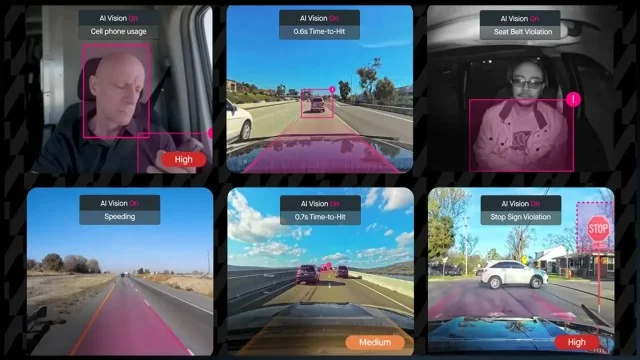
Fleet technology changes can expose safety issues that earlier systems missed, while also changing how drivers and back-office teams work. Four organizations that switched providers report measurable results, from more captured driving events to fewer accidents and Hours of Service violations. Their experiences come from customer reports and studies with different methods, so they’re useful as operating examples rather than guarantees of what another fleet will achieve.
Driver feedback shaped two head-to-head trials
Reliable Carriers transports high-value vehicles for automotive brands across the U.S. and Canada. Damage and late deliveries carry costs, and the company wanted better visibility to coach drivers proactively. It tested two finalists over several months with 40 drivers. All of the test drivers chose Motive over Samsara.
Product Manager Lauren Abrams said the AI Dashcam’s detection and automatic video tagging helped the safety team find relevant events. Drivers could also review their own footage in the Motive Driver App, without calling the back office as they had to with Samsara. Abrams said feedback was consistent across over-the-road, regional and owner-operator drivers.
In the year after the trial, Reliable reported a 99.9% damage-free delivery rate and 100% on-time delivery. The company attributed those results to the technology working alongside its hiring requirements, orientation and continuing education. Abrams described switching providers as daunting, but said the trial gave the company confidence in its choice. The company’s comparison of Motive and Samsara provides more detail.
EnerCorp, an oilfield services company operating in high-risk West Texas conditions, had a different concern: its Geotab telematics lacked detail, but leaders worried cameras could prompt drivers to leave. U.S. Fleet Manager Aaron Kelver arranged a sequential trial, placing Samsara units in seven vehicles for three months, then testing Motive AI Dashcams in the same vehicles with the same drivers for another three months.
Kelver said Motive’s AI detection was more accurate, particularly for distracted driving and cell phone use. He also valued the ability to recognize positive driving habits and reward drivers. After selecting the system, EnerCorp’s in-house mechanics installed cameras across 220 vehicles within 90 days. Within two months of installation, EnerCorp reported cell phone use down 25%, distracted driving down 10% and stop-sign violations down 19%. The company’s Motive-Samsara comparison outlines the product evaluation.
More alerts gave a Texas carrier a clearer risk picture
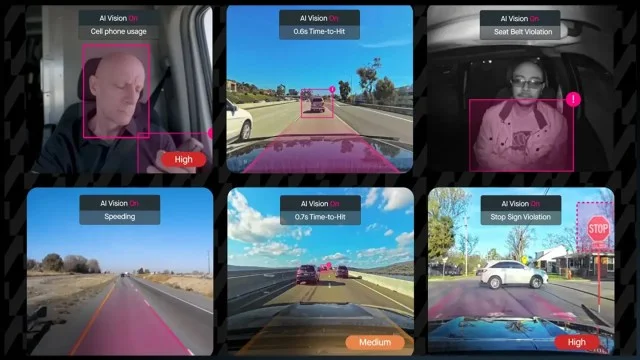
A Texas line haul provider with 125 vehicles had seen accidents rise while its Lytx cameras flagged few unsafe events. The company’s vice president of risk management said the low alert count had given leaders the impression that safety was under control. After switching, the data showed far more activity: speeding events rose from about three to hundreds per month, and the first month’s cell phone alerts numbered in the hundreds after Lytx had recorded none.
Coachable alerts increased 3,900% in one month, or 40 times the previous level, according to the carrier’s account. The team now aims to address an event within an hour, using video to show drivers the behavior at issue.
The carrier later reported 74% fewer DOT accidents, a 33% reduction in preventable accidents and a 67% decrease in total video events. The vice president linked the results to real-time alerts, driver coaching and improved visibility. He also said unsafe events and accidents were declining, while inspections were improving. These changes show how a higher initial alert count can reveal risks that a fleet can then work to address. More information is available in the company’s Motive-Lytx comparison.
Simpler data access supported compliance work
Heritage-Crystal Clean moves hazardous and recycled materials through more than 90 service branches with nearly 1,000 vehicles. Its previous telematics system made safety and compliance data hard to retrieve, according to Ryan Duffy, the company’s DOT Compliance and Safety Manager. The driver app also crashed, missed trips and disconnected, generating four or five support calls a day, he said.
After evaluating several vendors, the company switched to Motive. Duffy said the new system made compliance and safety information easier to find and share. The team also uses Motive to record OSHA information for all safety-sensitive employees, including staff who don’t drive commercial vehicles but still need work hours captured. Since switching, Heritage-Crystal Clean has reported 25% fewer Hours of Service violations and a 38% improvement in CSA scores. Its customer account describes the change.
Reported time to value varies by prior provider
Motive’s 2026 ROI Report says surveyed customers who switched reached their first return on investment more than twice as fast when coming from Samsara, 1.9 times faster from Verizon Connect and 1.4 times faster from Lytx. These are averages comparing each respondent’s time to first ROI with Motive against their time with the previous provider. In G2’s Fall 2026 reports, enterprise fleet management customers reported reaching ROI in 5.7 months, compared with 9.44 months for Samsara customers. The figures and survey basis are described in the 2026 Motive ROI Report and Motive’s Verizon Connect comparison, with the G2 results in its Fall 2026 report.
IDC’s study of six organizations using Motive’s AI safety tools found that those with the strongest outcomes had conducted structured, side-by-side trials in real driving conditions. The organizations reported 58% fewer unsafe driving behaviors, including phone use and close following, compared with their prior safety technology. Those that ran comparative trials rated Motive’s AI detection 50% more accurate on average under their own criteria, and reported a five-month payback on their safety investment. IDC’s findings are based on interviews with six organizations, not a controlled vendor comparison or a population-level study. The study summary and IDC white paper describe the research.
The evidence across these cases points to a practical evaluation approach: test systems under real operating conditions, include drivers in the assessment, and track both the alerts a platform captures and the outcomes that follow. The ROI report covers findings from 351 organizations. Its online survey of current Motive customers across North America ran from June through August 2025; switching figures compare average time to first ROI after adopting Motive with the previous provider. Customer results reflect each organization’s reported experience and can vary.


