Tuesday, October 20, 2026 · Trucking & Freight
CMA CGM, Maersk and Hapag-Lloyd Set Africa Peak Season Surcharges
Noted by Richard Brown · 978 reads
Three carriers set new surcharges for Asia and Oceania cargo bound for African ports, with rates and start dates varying by carrier and destination.
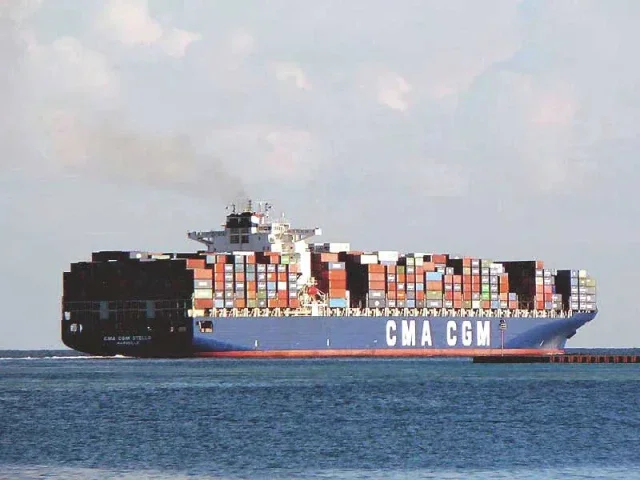
Shippers moving containers from Asia and Oceania to African ports face new peak season surcharges from CMA CGM, Maersk and Hapag-Lloyd, with changes taking effect from October 22 through October 26. The charges vary by carrier, destination, container size and booking type, so the origin and port combination will determine the added cost.
The start dates are close together, but the rate structures aren’t interchangeable. CMA CGM sets different per-TEU amounts across several Africa regions and individual routes. Maersk prices its charge per container, with separate rates for 20-foot, 40-foot and 45-foot equipment. Hapag-Lloyd applies per-TEU charges to specified ports in Northwest and Southwest Africa. For shippers and forwarders comparing options, checking the precise destination, equipment and applicable loading or price calculation date will be essential.
CMA CGM sets route-specific charges from October 22
CMA CGM’s charges begin on the October 22 loading date for short-term contract cargo, including dry and reefer containers, on China-to-West Africa services. The rates are USD 350 per TEU for Central West Africa, covering Nigeria, Cote d'Ivoire, Benin, Equatorial Guinea, Ghana and Togo. South West Africa is set at USD 550 per TEU and includes Angola, Republic of Congo, Democratic Republic of Congo, Namibia, Gabon and Cameroon.
For North West Africa, the charge is USD 250 per TEU. The listed destinations are Liberia, Senegal, Mauritania, Gambia, Sierra Leone, Guinea-Bissau, Cape Verde and Sao Tome and Principe. China-to-Conakry, Guinea, remains at USD 200 per TEU, unchanged from the existing amount described in the carrier’s rate information.
Separate CMA CGM charges apply to other routes. Cargo on the Far East-to-Durban, South Africa lane will incur USD 750 per TEU from October 22 until further notice. China-to-Mozambique cargo will incur USD 200 per TEU. These route-specific amounts mean the origin label matters: the Far East charge and the China charge refer to distinct services in the carrier’s description.
Maersk prices by container size and booking
Maersk’s surcharge starts October 26 and remains in effect until further notice. It covers cargo originating in Mainland China, Hong Kong and Taiwan and destined for all West Africa ports. The charge is USD 800 per box for 20-foot dry and reefer containers. For 40-foot dry and reefer containers, it is USD 1,600 per box; 45-foot high-cube containers also carry a USD 1,600 charge per box.
Booking type changes how the surcharge applies. Maersk excludes SPOT bookings. For other bookings, the applicable amount is determined by the price calculation date, and collection follows the ocean freight payment terms. Shippers reviewing quotations will need to confirm both whether the booking qualifies for the exclusion and which calculation date governs the quoted rate. The listed amounts are per box, while CMA CGM and Hapag-Lloyd describe their charges per TEU; those units should be kept distinct when comparing costs.
Hapag-Lloyd distinguishes Northwest and Southwest destinations
Hapag-Lloyd’s charges begin on the October 25 loading date and continue until further notice. They apply to all container types moving from China, South Korea, Japan and Oceania to the ports specified for each region.
For Northwest Africa, the surcharge is USD 400 per TEU. The covered ports are Nouakchott in Mauritania, Dakar in Senegal, Freetown in Sierra Leone, Monrovia in Liberia and Banjul in Gambia. For Southwest Africa, the amount rises to USD 800 per TEU.
The Southwest Africa list spans several countries and ports: Luanda, Lobito and Cabinda in Angola; Pointe-Noire in Republic of Congo; Matadi and Boma in Democratic Republic of Congo; Libreville and Port-Gentil in Gabon; Kribi and Douala in Cameroon; Walvis Bay in Namibia; and Bata and Malabo in Equatorial Guinea. A country-level destination check may not be enough where the charge list identifies particular ports, so booking teams should match the named port against the applicable service information.
What to check before booking
The changes create a short window in which loading date can affect which surcharge applies. CMA CGM and Hapag-Lloyd specify loading dates, while Maersk’s non-SPOT charge depends on the price calculation date. Cargo planners should check the relevant date basis alongside the origin, destination, container type and booking category before finalizing a cost estimate.
Because some amounts remain in effect until further notice and the carriers use different units and scopes, a single “Africa surcharge” comparison would obscure important differences. Teams preparing shipments can use the carrier, route and equipment details as a checklist when reviewing current freight information and sailing plans. The practical takeaway is to verify the charge against the exact movement and booking terms before cargo is committed.