Tuesday, October 20, 2026 · Ocean Shipping & Ports
ONE Assesses Fire’s Impact on ESPIRITO SANTO EXPRESS and SX1 Service
Noted by David Johnson · 638 reads
ONE says the crew is safe, but vessel timing, port rotation and cargo condition remain under assessment.
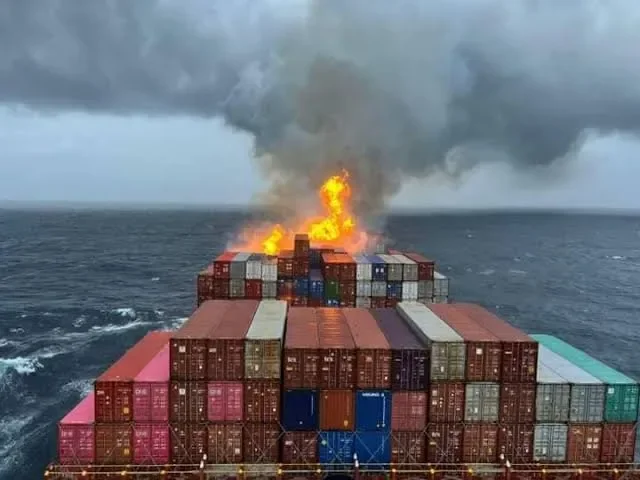
The immediate operational picture for the ESPIRITO SANTO EXPRESS remains unresolved. Its crew is safe, while the fire’s effects on the ship, cargo and service schedule are still being assessed. Ocean Network Express (ONE) says it can’t yet confirm changes to the vessel’s timing or port rotation on the SX1, its East Coast South America Express 1 service. For shippers, that leaves the central question unanswered: what will happen to the cargo already aboard?
The vessel was sailing from Singapore to Santos when the incident occurred. ONE has been notified, and the vessel’s head owner has confirmed that all crew members are safe. The response is focused on bringing the situation under control, with crew welfare and protection of the vessel and its cargo identified as immediate priorities. Those priorities come before firm voyage decisions; the ship’s next move depends on what the response and assessment teams find.
Schedule and cargo status are unconfirmed
For shippers using the SX1, the key information gap is what the incident means for the cargo onboard and the vessel’s next movements. Assessments by specialized teams and relevant authorities are ongoing, and their findings will shape the operational picture. Until those checks establish the fire’s extent and its consequences for the vessel, ONE says it can’t confirm the cargo’s condition or whether the ship’s schedule or port rotation will change. That uncertainty is material for anyone coordinating onward transport around the planned arrival.
That distinction matters for cargo planning. A vessel incident can leave several questions open at once: whether the ship can continue its voyage, whether its planned calls remain feasible, and whether cargo can be handled as expected. In this case, none of those outcomes has been confirmed, so assumptions about an unchanged sailing carry real planning risk. Customers should treat the schedule and cargo position as pending assessment, then check later updates before committing to arrangements tied to this shipment. A revised port sequence, if one is confirmed, could change the timing of cargo availability even if the voyage continues.
The available information doesn’t specify the fire’s location or extent, the number or type of containers affected, or how long the assessment may take. It also doesn’t identify any ports on the SX1 rotation that might be affected beyond the vessel’s stated voyage from Singapore to Santos. Those details will be needed to clarify the practical effect on individual shipments, since an update about the vessel alone may not answer every customer’s cargo question. Until then, the scale of any disruption can’t be reliably judged from the information released.
ONE is coordinating with the vessel’s owner
ONE says it remains in contact with the vessel’s head owner and the teams involved in responding to the incident. The company plans to share further information as the assessment advances and verified details become available. Its updates are expected to address vessel operations, schedule implications and cargo status, though no timing for the next update has been given. That leaves customers waiting for findings that are useful for decisions, rather than a timetable for when those findings will arrive.
For cargo interests, the most useful next information will be specific and operational: whether the ship can safely continue, whether its port sequence or timing will be revised, and what the assessment finds about cargo condition. Each answer affects a different part of shipment planning. If you’re working in this space, the practical response is to keep plans tied to this sailing flexible and use verified updates when making arrangements around arrival, port calls or cargo release. Here’s the thing: a general incident update may confirm progress without resolving the status of a particular shipment.
The incident concerns one vessel assigned to the SX1 service; the information released so far doesn’t establish any broader effect on the service’s other sailings or capacity. Nor does it confirm that cargo has been damaged. The assessment is still underway, so the operational consequences remain open. For now, the distinction between a confirmed incident and a confirmed service disruption matters: the first is established, while the second hasn’t been reported.
What shippers should watch next
ONE has asked customers and partners for understanding while the situation is assessed. For now, the confirmed information is limited but clear: the ESPIRITO SANTO EXPRESS was en route from Singapore to Santos when the fire occurred, all crew members are safe, and the vessel’s operational and cargo status have yet to be determined. The next update will be consequential for shippers because it should establish whether this voyage requires changes to timing, port calls or cargo planning. A concrete operational update will give cargo interests a firmer basis for deciding what to adjust.
This is more significant than it looks for customers whose plans depend on the sailing, even though the facts released so far don’t establish a wider service impact. Similar vessel incidents typically require operators and response teams to resolve safety and condition questions before reliable schedule decisions can be shared. That said, the available information doesn’t support a forecast about how long that process will take or what its outcome will be. The sequence of decisions matters: first the assessment, then clearer guidance on the voyage and cargo.
And yet, the uncertainty itself has a practical cost. Shippers may need to preserve options around cargo timing while waiting for confirmation, especially where other transport arrangements depend on the vessel’s arrival. The part still unknown. Customers will need to distinguish updates about the ship’s condition from updates that address their own cargo and planned handling. Until those details emerge, the safest reading of ONE’s notice is straightforward: the crew is safe, and the rest remains under assessment.


