Monday, October 19, 2026 · Ocean Shipping & Ports
Matson’s $1 Billion Fleet Renewal Adds Three Ships to Hawaii and China Routes
Noted by William Rodriguez · 793 reads
Matson expects three 3,600-TEU vessels from 2027 to 2028, replacing existing ships and adding capacity on Hawaii and China–Long Beach services.
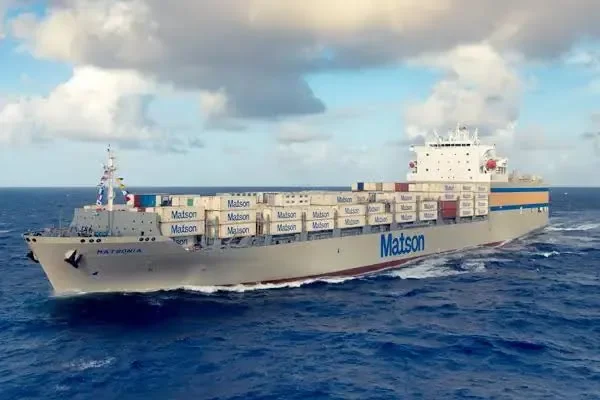
Matson is committing approximately $1 billion to replace three vessels serving Hawaii and the China–Long Beach Express, with the first replacement scheduled to enter the fleet in 2027. The plan pairs renewal with added capacity on two core routes, giving shippers a clearer view of the equipment Matson expects to deploy over the next several years.
The first ship, Makua, was named at Hanwha Philadelphia Shipyard in Philadelphia on 10 October local time. Matson said on 12 October that it expects delivery in the first quarter of 2027, followed by deployment on the China–Long Beach Express and Hawaii services. The other vessels are Malama, due in the third quarter of 2027, and Makena, expected in the second quarter of 2028.
Three deliveries, two core services
The schedule lays out a phased fleet transition rather than a single capacity addition. Matson plans to introduce the ships in sequence, with each one replacing an existing vessel now assigned to its Hawaii and China–Long Beach Express services. The company has said the new fleet will increase capacity on those routes while improving operational efficiency and service reliability.
For customers planning ocean moves, the distinction matters: replacement ships can change the capacity and operating characteristics available on a route without signaling that the carrier is launching a new service. Matson has not provided route-level capacity figures or specified how much additional space each service will receive. The stated effect is an increase in capacity across its core Hawaii routes and the China–Long Beach Express as the new ships enter service.
Matson serves Hawaii, Alaska, Guam and other markets, and operates an expedited ocean freight service from China to the Port of Long Beach, California. The China–Long Beach Express is one of its principal transpacific offerings. The three new vessels are intended for two parts of that network: Hawaii service and the China–Long Beach connection.
Ship design and fuel options
Each Aloha Class vessel will measure approximately 259 metres and carry 3,600 TEU. Matson lists a maximum speed of nearly 24 knots. Those specifications describe the ships’ size and capability, but the company has not shared a route-by-route sailing schedule or details on how the vessels’ service speeds will affect transit times.
The ships will have dual-fuel engines able to operate on conventional marine fuel or liquefied natural gas (LNG). They are also set to arrive LNG fuel-ready, alongside a fuel-efficient hull design, double-walled fuel tanks and a freshwater ballast system. The source does not specify when LNG use would begin, or how much of each ship’s operating time would rely on either fuel. For operators and cargo planners, the practical change at delivery is the addition of ships equipped for those fuel options and systems.
All three vessels are being built to meet the requirements for vessels carrying cargo between U.S. ports. Matson has described the ships as replacements for three vessels currently serving Hawaii and the China–Long Beach Express. The delivery and deployment sequence will therefore determine when capacity and equipment changes reach those routes.
What shippers can track
Matson Chairman and Chief Executive Officer Matt Cox said the company expects the three ships to join the fleet progressively over the next 18 months, improving efficiency and reliability while expanding capacity on the targeted services. That timeline is tied to the company’s delivery and integration plans; the published milestones currently run from the first quarter of 2027 through the second quarter of 2028.
For shippers, the next useful details will be the vessels’ actual entry dates, their assignments within each service and any changes Matson makes to sailing schedules or available space. The present plan establishes the fleet’s size, delivery order and intended routes, while leaving those operating details open. Matson’s stated aim is a gradual replacement that adds capacity where its new ships are deployed.


