Monday, October 19, 2026 · Trucking & Freight
Maersk Adds Asian Capacity as Intra-Regional Trade Grows
Noted by John Davis · 547 reads
Maersk leads Asia’s regional capacity deployment and plans to add sailings as manufacturing growth and supply chain diversification reshape cargo flows.
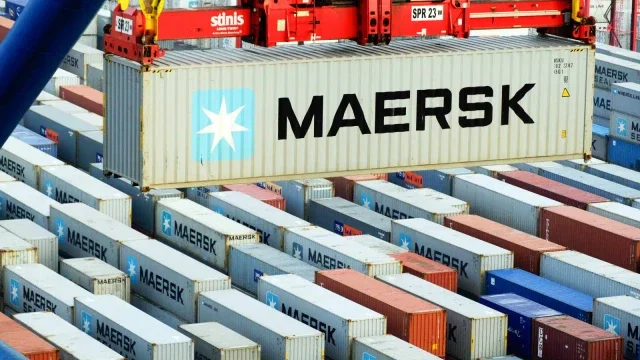
Maersk is expanding its Asian network as manufacturers diversify production and regional trade links deepen. The carrier already has the largest capacity deployment in the region, based on Alphaliner’s September figures, and says it expects its network to develop with customer demand and changing trade patterns.
Alphaliner counted more than 343,000 TEUs of Maersk capacity in the Asian regional market, the world’s largest container shipping market. The carrier operated 108 vessels on those routes, with an average capacity of 3,176 TEUs. Its hub-and-spoke Gemini network has helped support the expansion, but Bhavan Vempati, Maersk’s Head of Asia Pacific Ocean Business, said that network structure is only one factor behind the company’s growth.
Manufacturing shifts are changing regional cargo flows
Vempati estimates intra-Asian routes account for about 22% of global trade. He pointed to supply chain diversification, manufacturing growth in Southeast Asia and closer economic ties among Asian economies as key sources of demand. Companies are spreading production across more locations, he said, making cargo flows within the region more complex and creating opportunities for carriers.
That shift can require shipping networks to connect additional production sites with export gateways and regional markets. For shippers, more frequent services and shorter transit times can help link factories to ports and onward routes. The practical value depends on whether schedules and connections fit the needs of each supply chain; simply adding vessels does not by itself resolve every routing or timing constraint.
Maersk expects origin diversification to keep supporting intra-Asian trade in the coming years and says it will add capacity in response. Vempati described the market’s long-term growth potential as significant, while framing network development around customer demand and trade patterns. He did not provide a timetable or volume target for future additions.
Malaysia and Cambodia services get more frequent
Maersk cited its work with glass manufacturer Kibing Group in Malaysia as an example of how it is adjusting regional connections. The companies are strengthening links between Kibing’s production hub in Sabah and Malaysia’s major port of Tanjung Pelepas. Maersk is increasing sailing frequency and reducing transit times on that connection, while also expanding services between Tanjung Pelepas and other routes.
The carrier has also increased weekly sailings on its China-to-Cambodia route from one to three. The added departures give customers more scheduling options on that lane. For manufacturers and logistics teams, frequency can affect how much inventory is needed to cover gaps between sailings, although the source did not specify transit-time changes or the vessels assigned to the route.
These examples show the operating detail behind Maersk’s capacity plans: changes to sailing frequency, port connections and transit times. As production becomes more distributed, the usefulness of a regional network will depend in part on how well those individual links connect factories, ports and onward services.
FM1 service resumes between Asia and the Middle East
Separately, Maersk and Hapag-Lloyd resumed the FM1 service on 13 October local time to strengthen connections between Asia and the Middle East. Maersk said the service will give customers additional direct access to Khor Fakkan in the United Arab Emirates. The first sailing is scheduled to be operated by Maersk Athabasca, expected to depart Qingdao, China, on 17 October.
Maersk said it would continue to observe necessary safety precautions during operations in the Middle East. The service resumption adds a direct connection for customers moving cargo between Asia and Khor Fakkan, while the company’s wider regional network changes address growing demand within Asia.
Maersk is among several major global carriers giving greater attention to intra-Asian trade. Vempati said the company intends to invest in reliable transportation and integrated logistics services as supply chains become more complex. He declined to comment on market share, but said customer feedback had encouraged the company and reinforced its confidence in the market.
For shippers, the clearest signals to watch are the services themselves: where Maersk adds sailings, how port connections change, and whether transit times improve on specific routes. The company’s next capacity decisions will show how its network adapts as manufacturing locations and regional cargo flows continue to shift.
===

