Monday, November 2, 2026 · Ocean Shipping & Ports
Global Parcel Market Reaches £577.3 Billion as Delivery Shifts Beyond the Home
Noted by Christopher Smith · 491 reads
Ti Insight puts the 2025 market at £577.3 billion, with Asia Pacific growth, parcel lockers, consolidation and operational AI reshaping carrier competition.
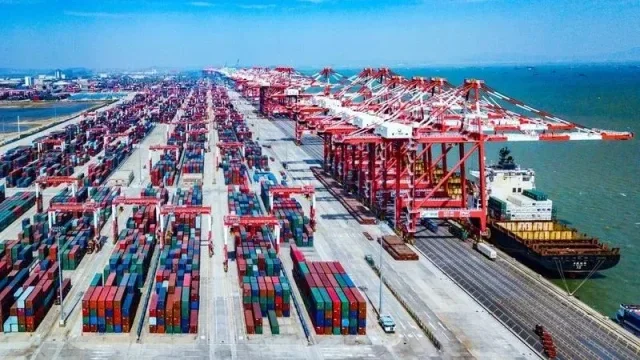
The global express and parcels market reached £577.3 billion in 2025, up 5.8% year over year, according to Ti Insight’s Global Express & Parcels 2026 Market Report. The expansion reflects e-commerce demand and a lasting change in where parcels are delivered: home delivery is losing share as lockers and pick-up points take on a larger role.
Ti forecasts the market will grow to £609.1 billion in 2026 and £760.1 billion by 2030, representing a compound annual growth rate of around 5.7%. Those figures describe a growing sector, but they don’t mean every carrier or region will benefit equally. For shippers, the practical question is whether a carrier’s network, delivery options and operating costs match the routes and customers they serve.
Asia Pacific leads regional growth
Asia Pacific became the largest regional market in 2024, overtaking North America. Ti projects an 8.0% CAGR for the region from 2026 through 2030, making it the strongest expected source of parcel market growth in the report’s forecast period.
North America and Europe are expected to grow more slowly, at forecast CAGRs of 4.1% and 3.6%, respectively. Ti also reports declining revenue at several of the largest carriers in these mature markets. The gap between expanding market totals and weaker results at individual operators points to pressure around pricing, service mix and the ability to convert higher parcel volumes into revenue.
For freight forwarders and logistics partners handling cross-border e-commerce, the regional split puts a premium on access to Asia Pacific capacity and connections. At the same time, slower growth in Western markets may intensify competition over price and service. Shippers may need to assess carriers at the lane level, since a provider’s broad market position won’t by itself show how well its network fits a particular origin, destination or delivery promise.
Out-of-home delivery becomes part of the network
The shift in European delivery patterns is one of the report’s clearest operational signals. Home delivery’s share of European e-commerce fell from 66% to 54% in twelve months. Over the same period, lockers and pick-up points grew to around 655,000 access points across Europe’s largest networks.
That scale makes out-of-home delivery a core part of last-mile infrastructure. A locker or collection point gives customers another way to receive parcels and gives carriers an alternative to delivering each item to an individual address. For shippers, the value depends on whether the available network serves their customers and whether the delivery option fits the service commitment they have made.
The change also has implications for how delivery performance is assessed. A parcel sent to a collection point follows a different final handoff from one delivered to a home. As these options expand, shippers and carriers will have to account for the delivery method when setting customer expectations and managing service. The report’s figures show a substantial shift in customer access points, though they don’t specify how that change affects costs or delivery times.
Deals reflect the value of network density
Ti tracked 136 mergers, acquisitions and investment transactions between May 2023 and August 2026. The most significant was a £7.8 billion agreement by a FedEx-Advent consortium to take InPost private. InPost operates one of Europe’s leading parcel locker networks, connecting the sector’s consolidation activity with the growth of out-of-home delivery.
The number of transactions points to an industry where scale, network density and last-mile assets are central competitive factors. Ownership changes can alter the carrier options available to shippers and forwarders, so existing contracts and service choices may need review as the market changes. The report does not detail how individual customers’ arrangements will be affected by the InPost deal.
AI applications move into daily work
Artificial intelligence is also shifting from trials into routine operations. Ti identified 34 AI use cases in express and parcels, 24 of which are already operational. That count suggests deployment has progressed well beyond experimentation across the applications covered by the report.
For logistics providers, live use creates a higher bar for digital operations and service performance. For customers, the relevant consideration is how a provider’s tools support the work it performs; the report’s figures don’t identify the specific applications or quantify their results. Shippers assessing carrier capabilities should look for operational evidence that is relevant to their own needs, rather than treating AI adoption as a performance measure by itself.
Growth won’t guarantee carrier gains
Report author Paul Chapman said the headline growth figures mask diverging results among carriers. He cited pricing pressure, subdued business-to-business demand and a shift toward lower-cost services as factors weighing on revenue in mature markets. He also pointed to the expansion of in-house delivery networks as competition for established operators.
Chapman’s assessment frames the central commercial challenge: rising parcel volumes don’t automatically produce profitable growth. Carriers must compete for shipments while managing service expectations and changing delivery models. For shippers, that can make price, coverage, delivery options and operating fit more useful selection criteria than market growth alone.
Ti’s report describes a market expanding while its structure changes. Asia Pacific is forecast to grow fastest; European delivery is moving toward lockers and collection points; transactions are reshaping ownership; and AI applications are entering day-to-day operations. The practical takeaway for shippers, importers and forwarders is to keep carrier choices aligned with regional exposure, last-mile requirements and the capabilities their customers expect.