Wednesday, November 25, 2026 · Ocean Shipping & Ports
CMA CGM Moves Far East–Manaus Cargo to SEAS 2 and BRACO via Rio
Noted by Thomas Garcia · 806 reads
CMA CGM is shifting Manaus cargo from PEX2 to a weekly SEAS 2–BRACO route via Rio, with both routings overlapping during the transition.
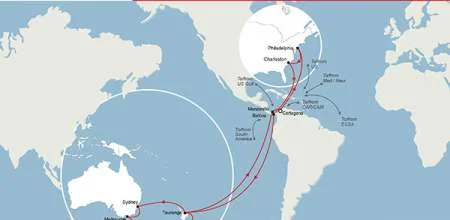
CMA CGM’s revised Far East-to-Manaus routing makes Rio de Janeiro the transfer point for cargo moving onward to the Amazonian port. The change replaces the PEX2 arrangement with a combination of the weekly SEAS 2 mainline service and the weekly BRACO regional service. The group says it will manage and operate the routing directly, which is designed to run independently of the Panama Canal.
For shippers and forwarders, the practical change is a new connection to plan around. Far East export cargo will travel on SEAS 2 to Rio de Janeiro, transfer there to BRACO, then continue to Manaus. The stated sea transit from Rio to Manaus is approximately 11 days. That figure covers the regional leg; the full door-to-port or port-to-port schedule depends on the applicable mainline sailing and the transfer connection.
Two weekly services form the new route
SEAS 2 provides weekly mainline coverage linking major export ports in northern, central and southern China. Its Rio de Janeiro call connects Far East cargo with BRACO, which operates weekly in South America and has dedicated capacity for the Manaus corridor. Together, the services create the new end-to-end routing for Far East-to-Manaus cargo.
The structure gives the shipment a defined handoff at Rio. That makes the timing between the SEAS 2 arrival and the BRACO departure an important part of an end-to-end estimate. Forwarders will need to recalculate transit plans and estimated arrival times using the new service combination, rather than carrying forward assumptions based on PEX2 or the former feeder arrangement. The approximately 11-day Rio-to-Manaus sea leg is one component of that calculation, not a complete transit estimate from an Asian origin.
The change also means that booking details need to identify which vessel and service will carry each shipment, particularly while the two routing arrangements overlap. A quote based on one path may produce a different connection and arrival expectation from a booking assigned to the other. For customers working to delivery dates, the relevant schedule is the one attached to the actual booking and carrying voyage.
Cutover dates create an overlap
The final vessel scheduled to carry Manaus cargo on PEX2 is CSCL LONG BEACH, voyage PEX0B0E19. Its voyage is due to begin from Vung Tau, Vietnam, on 18 November 2026. The last sailing on the existing Manaus shuttle feeder is CMA CGM ALEXANDRIA, voyage MAS0Y0S19, expected to arrive in Manaus on 20 January 2027.
SEAS 2 will take on Manaus cargo before that final feeder arrival. The first vessel assigned to the new arrangement is COSCO SHIPPING BRAZIL, voyage SE2080W19, scheduled to depart Qingdao, China, on 4 December 2026. This timing establishes a period when the incoming SEAS 2–BRACO route and the outgoing routing are both in operation. The old feeder’s completion is therefore not the start date for the new service combination.
That overlap matters for cargo moving at different stages of the booking and transport process. A shipment booked before the change may not follow the same sequence as one assigned to the first SEAS 2 sailings. Cargo already at sea, space already allocated, and new bookings may each have a different applicable voyage. The announced cutover sailings give forwarders concrete reference points, but they do not remove the need to check each shipment’s routing.
Recheck connections and delivery estimates
Forwarders should verify the assigned carrying voyage, the Rio de Janeiro transfer and the onward BRACO sailing when preparing customer quotes or revising existing delivery plans. Where space has already been confirmed or cargo is in transit, CMA CGM’s local agent can verify which routing applies. That check is especially relevant during the parallel operating period, when both the old and new paths remain in use.
For operations teams, the main planning task is to update shipment records and arrival estimates to reflect the route actually assigned. A change in transshipment point affects the connection that sits between the long-haul ocean leg and final delivery to Manaus. Keeping the service and voyage details aligned across booking, tracking and customer updates can help prevent different teams from working to different arrival assumptions.
Once the transition is complete, Far East-to-Manaus cargo will be consolidated on SEAS 2 and BRACO. Until then, the cutover vessel and the booking-specific routing determine which schedule to use. The Rio connection, the approximately 11-day regional sea leg and the overlap through the final feeder arrival are the key details for building a dependable delivery estimate.