Wednesday, November 18, 2026 · Supply Chain Tech
Motive Card Combines Telematics and Spending Controls to Flag Fuel Purchases
Noted by Jennifer Bahk · 695 reads
Motive links fuel transactions with vehicle data, giving managers mismatch alerts, automatic declines and card controls to review possible misuse.

Fuel card records show where a purchase was made; vehicle telematics can add where the truck was and what its fuel level was at the time. Motive Card brings those data points together to help managers identify transactions that warrant review, apply spending limits and respond to possible unauthorized use. The system’s flags can guide an investigation, while the available data and vehicle assignments determine how useful each signal is.
Use vehicle location to check a purchase
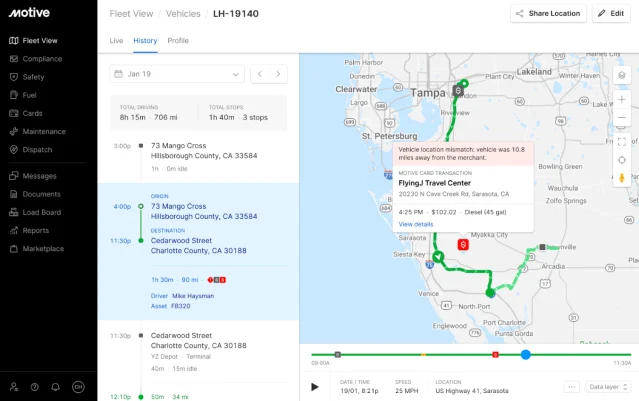
A transaction may be flagged when a vehicle’s reported location does not match the fuel station where its assigned card was used. For instance, a card assigned to a truck could be used at a pump while the truck’s reported position is elsewhere. That location mismatch is a prompt to check the details, not a finding that misuse occurred.
Managers can examine the transaction alongside the vehicle and driver assignments, route and work schedule. Those details help establish whether the truck’s recorded position was current and whether another operational explanation could account for the difference. A mismatch alert is most useful when treated as one part of that review, rather than as a conclusion on its own.
If the relevant fraud control is enabled and current vehicle-location data is available, Motive’s AI-powered detection can automatically decline an eligible transaction when the vehicle is too far from the station. The check depends on current data from the Vehicle Gateway. A disconnected gateway or one that has not been assigned to the vehicle can prevent the location check from working. For fleet managers, that makes device connection and vehicle assignment part of the practical setup behind this control.
Check fuel type and reported tank level
Location is only one telematics signal. Motive can also flag a mismatch between the fuel type bought and the vehicle’s expected fuel type, or a difference between the gallons purchased and the vehicle’s reported fuel level. These discrepancies can point managers toward transactions to examine, including possible side-fueling or a purchase made for a personal vehicle.
The flags don’t settle what happened. Vehicle assignments, tank information and transaction details all affect the interpretation. A difference between gallons purchased and reported tank level, for example, needs to be considered with the accuracy and availability of the vehicle data. Managers can use the transaction record and fleet context to decide whether the discrepancy has an operational explanation or needs further attention.
When fuel-level controls are enabled, Motive can automatically decline an eligible purchase if the vehicle’s reported tank level is above the configured threshold. This check relies on fuel-level data reported by the vehicle. The setting therefore connects a spending decision to the condition of the underlying data: if fuel-level reporting is unavailable or does not reflect the vehicle’s status, the check may not provide the intended signal.
Add a cardholder verification step
Mobile card unlock requires a cardholder to unlock Motive Card through the Motive Driver App or by SMS before using it. That extra step can help limit unauthorized use if a card is lost or its details have been skimmed. It addresses a different point in the process from telematics checks: the cardholder verifies access before purchase, while vehicle data can help assess the transaction itself.
Fleet teams can combine that step with spend controls set by amount, time, merchant or category. These settings help keep purchases within company rules. If an administrator believes a card may be compromised, they can freeze it from the Motive Dashboard. A fraud alert alone does not freeze a card, so managers still need to decide whether to take that action.
Know the coverage limits and reporting window
Motive’s Fraud Protection Guarantee offers limited protection for eligible unauthorized transactions made with a Motive Card. Accounts with an annualized credit limit of $1 million or more may qualify for up to $250,000 in annual coverage, capped at $15,000 per card. For accounts with an annualized credit limit below $1 million, the maximum annual coverage is $25,000.
Coverage is subject to the guarantee’s terms and conditions. These include account eligibility, required fraud-prevention features being enabled and functional, and reporting unauthorized transactions within 72 hours of the transaction date. The stated limits and conditions matter when organizations assess what the guarantee provides alongside their day-to-day card controls.
Bring the signals into one review process
Connecting card transactions with vehicle and driver information gives managers more context for investigating suspicious fuel purchases. Location and fuel-level flags can direct attention to a transaction; automatic declines can act when configured conditions are met; mobile unlock and spending limits add controls before or during card use. A card freeze gives an administrator another response if compromise is suspected.
The practical value depends on matching those controls to the fleet’s data and procedures. Teams can review which vehicles have working gateways, confirm assignments, set suitable spending rules and define how staff will follow up on alerts. Motive’s spend management tools and fraud detection controls bring these options into the fuel-spend workflow, with managers responsible for reviewing flagged activity and choosing the appropriate response.