Wednesday, November 18, 2026 · Trucking & Freight
Port of Los Angeles Posts Second Straight Month Above 1 Million TEU
Noted by Richard Rodriguez · 764 reads
October volume rose 21% year over year as imports and empty container moves climbed, extending the port’s busiest five-month stretch.
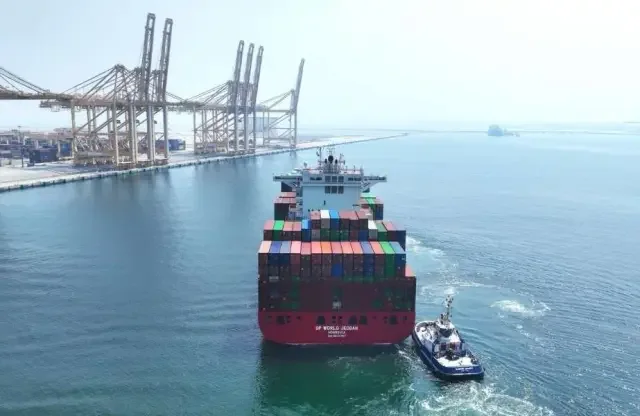
The Port of Los Angeles handled 1,026,872 TEU in October, clearing one million containers for a second consecutive month. The sustained pace puts pressure on the practical links between vessel unloading, terminal yards and inland transport: a busy berth is only one part of moving the added freight out of the port.
October volume was up 21.0% from a year earlier. Loaded imports reached 539,000 TEU, a 25.5% increase, while loaded exports fell 7.1% to 115,000 TEU. Empty container movements rose 26.4% to 373,000 TEU, setting a monthly record at the port. The mix matters for operations: import growth adds freight that must be picked up and transferred inland, while empty boxes also need space and handling as carriers reposition equipment.
Import growth is accompanied by record empty moves
The simultaneous increase in loaded imports and empty movements points to two demands on port operations. U.S. importers are continuing to replenish inventories, while carriers are moving empty equipment back toward Asia for later export cycles. Those flows use terminal capacity differently, but both require containers to be handled, staged and transferred efficiently.
For truckers and freight operators, the key measures are not just the number of containers discharged. Pickup timing, return arrangements for empty equipment and access to inland connections shape how quickly cargo can clear terminal space. At high volume, delays in any one step can slow the next move: a late pickup can keep a loaded box in the yard, while a poorly coordinated empty return can complicate equipment availability and yard planning.
Port Executive Director Gene Seroka said the ability to sustain the throughput is a more meaningful signal than the records alone. He linked the increase to consumer spending, retailer restocking, shifts in trade patterns and disruptions on other global shipping routes. He also said shippers and carriers continue to choose Los Angeles based on supply chain speed, reliability and geographic reach.
Five months of elevated volume reshape the operating picture
The port processed 9.108 million TEU during the first ten months of 2026, up 5.1% from the same period a year earlier. Monthly totals show how long the elevated stretch has lasted: June was the first month to exceed one million TEU, followed by 960,000 TEU in July and 956,000 in August. September set a port record at 1.04 million TEU, and October again topped one million.
Across June through October, throughput approached five million TEU. The port described this as its busiest five-month run. That sustained volume places ongoing demands on terminal handling, yard cycle times, rail transfers and trucking connections. Capacity is not only a question of how much equipment a terminal can process; it also depends on whether appointments, labor, yard space and inland transport are coordinated with the flow of arriving containers.
For shippers, the operating implication is to keep pickup and delivery plans closely aligned with terminal availability. Freight forwarders and carriers can help maintain flow by using appointments effectively and coordinating container pickups with available trucking and rail capacity. Those steps do not remove the underlying volume, but they help prevent avoidable dwell when multiple parts of the network are busy at once.
Commercial operations continue alongside Games planning
At the same media briefing, Seroka and LA28 Chief Executive Officer Reynold Hoover discussed preparations for the 2028 Olympic and Paralympic Games. The port is set to host Olympic sailing competition, bringing venue planning into an active commercial port. Hoover described Los Angeles as a major global gateway and recognized the coordination required to fit a sporting venue into an operating freight hub.
The port and LA28 are planning for the event while commercial cargo continues to move through the facility. That gives port management a long-term coordination task alongside its day-to-day work: venue arrangements and sustainability plans will need to account for the port’s freight role. For logistics operators, the immediate focus remains the continuing high container flow and the speed at which cargo and empty equipment can move between terminals and inland networks.
October’s result extends a run of unusually high throughput, with import demand and empty repositioning both contributing to the workload. The next operational signal to watch is whether terminal and inland connections can keep container pickup, rail transfers and equipment returns moving at a pace that matches the arrivals.