Sunday, November 22, 2026 · Trucking & Freight
Truckload Routing Guide Premium Rises as Primary Tender Acceptance Falls
Noted by Zach Strickland, FW Market Expert & Market Analyst · 942 reads
SONAR’s second-tender premium reached 10.69% as primary acceptance fell to 88.06%, raising the cost of backup truckload capacity ahead of Thanksgiving.
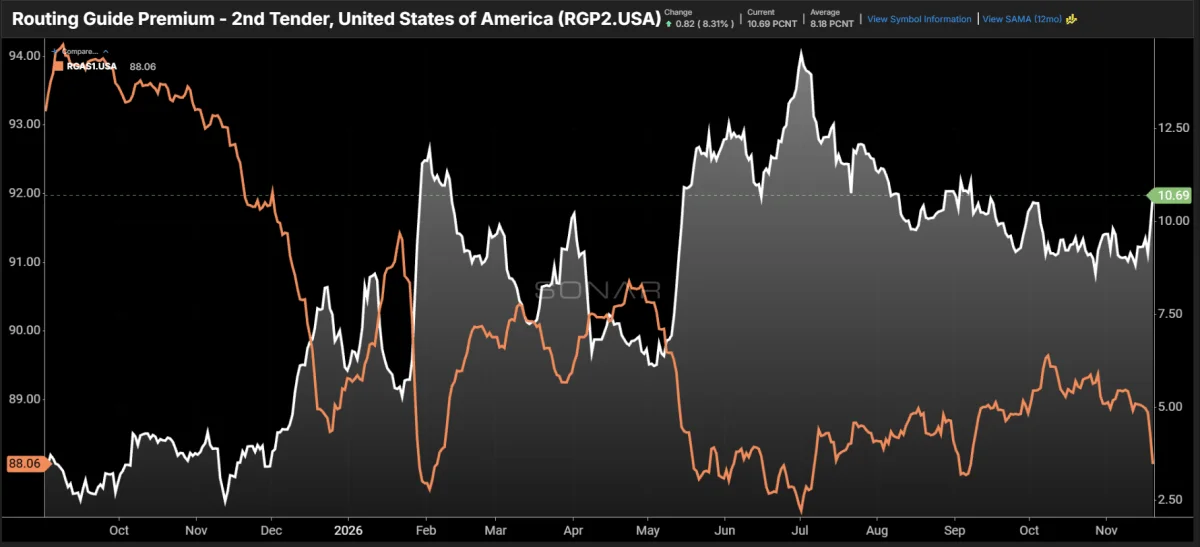
Shippers are paying more when their first-choice truckload carrier declines a load. On Thursday, Nov. 19, SONAR’s Routing Guide Premium for the second tender (RGP2) reached 10.69%, up from 8.82% a week earlier. At the same time, the Routing Guide Acceptance Share for the first tender (RGAS1) fell 88 basis points to 88.06%, its lowest reading since September.
Together, the measures show a tightening link between carrier availability and the cost of keeping freight in a shipper’s routing guide. More loads are passing beyond the primary carrier, while the carriers asked to cover those loads are charging a larger premium. The move came in the run-up to Thanksgiving, a period when seasonal freight can put added pressure on truckload capacity.
Backup coverage is becoming more expensive
RGP2 measures the all-in rate difference between a shipper’s primary carrier and carriers further down its routing guide. Fuel and accessorial charges are included. In practical terms, the index tracks the extra cost associated with a second tender after the first carrier does not accept the load.
The latest weekly increase was 1.87 percentage points. That takes the premium from roughly 8.8% to 10.69% in about a week, making it the highest reading since September. For transportation teams building contingency budgets, the pace matters: a planned allowance can be overtaken quickly when acceptance softens and replacement capacity gets dearer.
RGAS1 measures the share of first tenders accepted by primary carriers. Its drop to 88.06% means a smaller portion of loads stayed with the first carrier offered the freight. The two indicators tend to move in opposite directions: when primary acceptance declines, shippers may need more backup coverage, and the cost of that coverage can rise.
These measures can move gradually before changing sharply around holidays or market disruptions. A year ago, the cost of a primary-carrier rejection was about 4%; that premium expanded to around 8% by Christmas. This year’s second-tender premium has already reached 10.69% ahead of Thanksgiving, based on the reported Thursday reading.
Contract freight can show pressure early
Higher second-tender costs don’t appear directly in spot-rate measures, because the freight remains part of a contract tender process. Contract loads also have longer lead times: the current average cited for contract tenders is about 3.7 days, compared with roughly one day for spot loads. That extra time can make changes in contract acceptance an early signal of stress before spot pricing clearly reflects it.
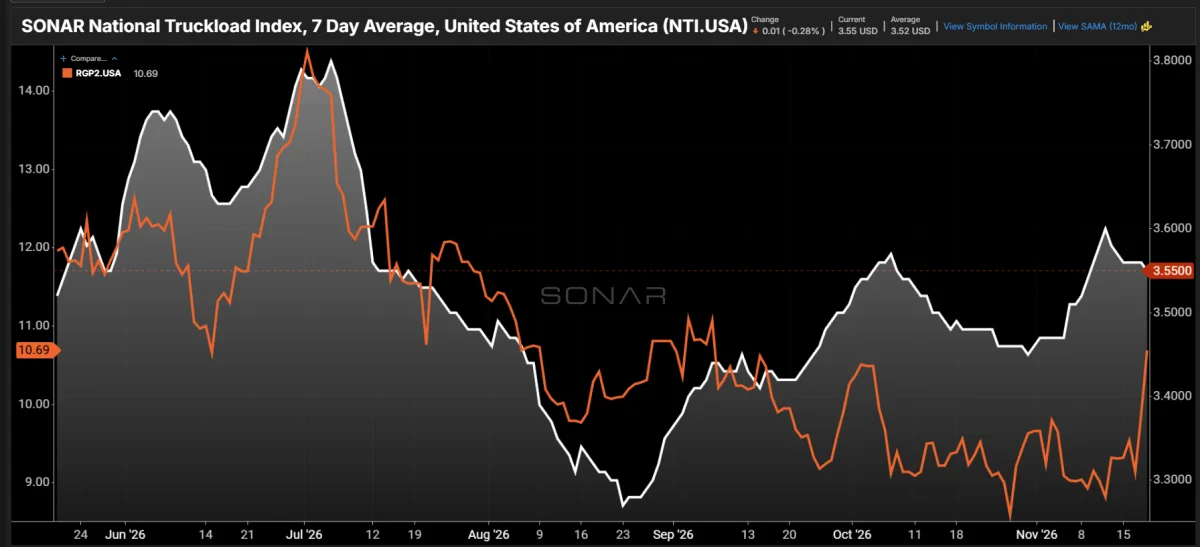
As of Thursday, Nov. 19, the National Truckload Index (NTI) was flat to slightly lower week over week, even as primary-carrier compliance deteriorated. The difference between those readings is useful for transport planners. Spot rates offer one view of the market, while tender acceptance and second-tender premiums show how reliably contracted routing plans are holding and what it costs to recover when they don’t.
When spot rates rise quickly, spot freight can also draw capacity away from contract loads. A carrier facing more attractive alternatives may be less inclined to accept a load priced under an earlier agreement, particularly when that shipper’s freight is a lower priority. Secondary carriers face the same broad capacity conditions as primary carriers, but they may have less reason to preserve a shipper relationship if they are contacted only when the first option declines.
Routing guide relationships affect resilience
Some of the added cost comes through contract-plus pricing: a shipper pays an amount above the standard contract rate for its primary carrier. That approach can help avoid a move to the spot market or a request to a carrier unfamiliar with the freight. Such a carrier may need extra effort to handle the shipment, adding to the cost of service.
The figures underline a planning challenge. A routing guide can list several carriers, but the names on the list don’t guarantee that each one will accept freight at the planned rate when capacity tightens. Transportation managers need to account for how secondary carriers respond under pressure, and to include backup pricing in bid discussions before seasonal demand makes coverage urgent.
That discussion also depends on the working relationship. Carriers may be less willing to absorb below-market rates for business they expect to lose once conditions ease. Shippers, in turn, need to consider how often they offer freight to backup providers and whether the terms reflect the service they may need during a disruption.
SONAR’s RGP2.USA and RGAS1.USA data captures the change in both acceptance and second-tender pricing. The immediate takeaway for shippers is to monitor the two measures together: acceptance shows whether primary coverage is holding, while the premium indicates what the next layer of the routing guide may cost. With the premium already above its level from a week earlier, contingency budgets and carrier conversations may need to reflect faster changes in capacity.