Saturday, November 21, 2026 · Ocean Shipping & Ports
Suez Canal’s 1869 Opening Reshaped Maritime Routes Between Europe and Asia
Noted by maritimecyprus · 671 reads
Opened on 17 November 1869, the Suez Canal shortened Europe–Asia voyages and remains a key route for global shipping.
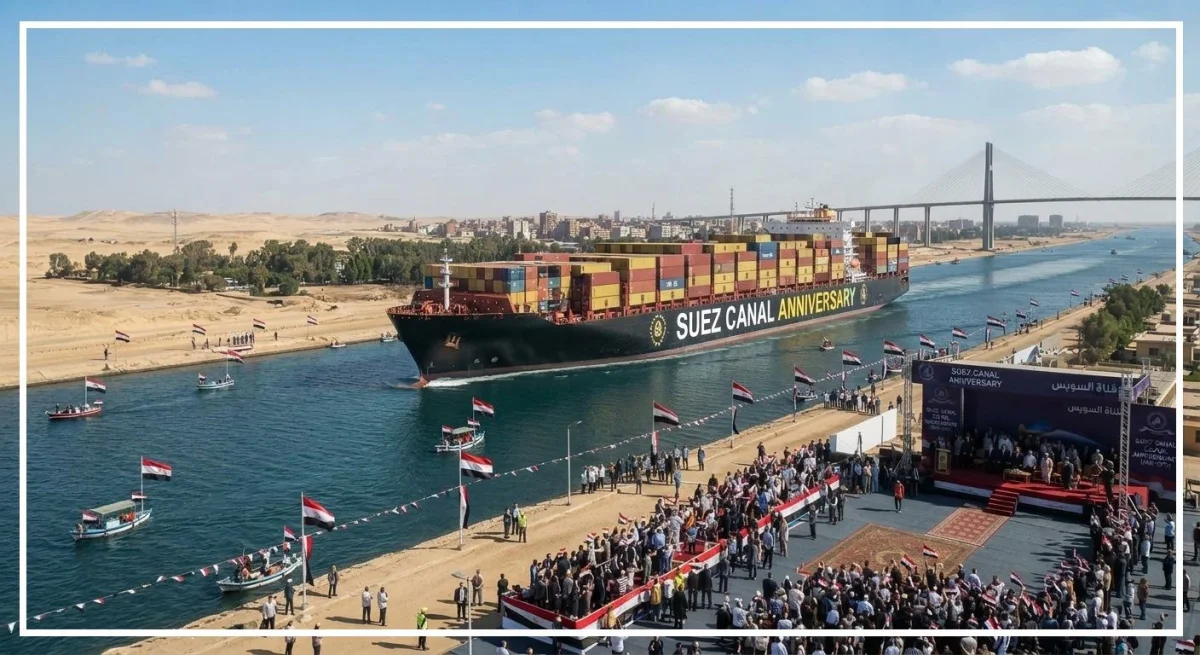
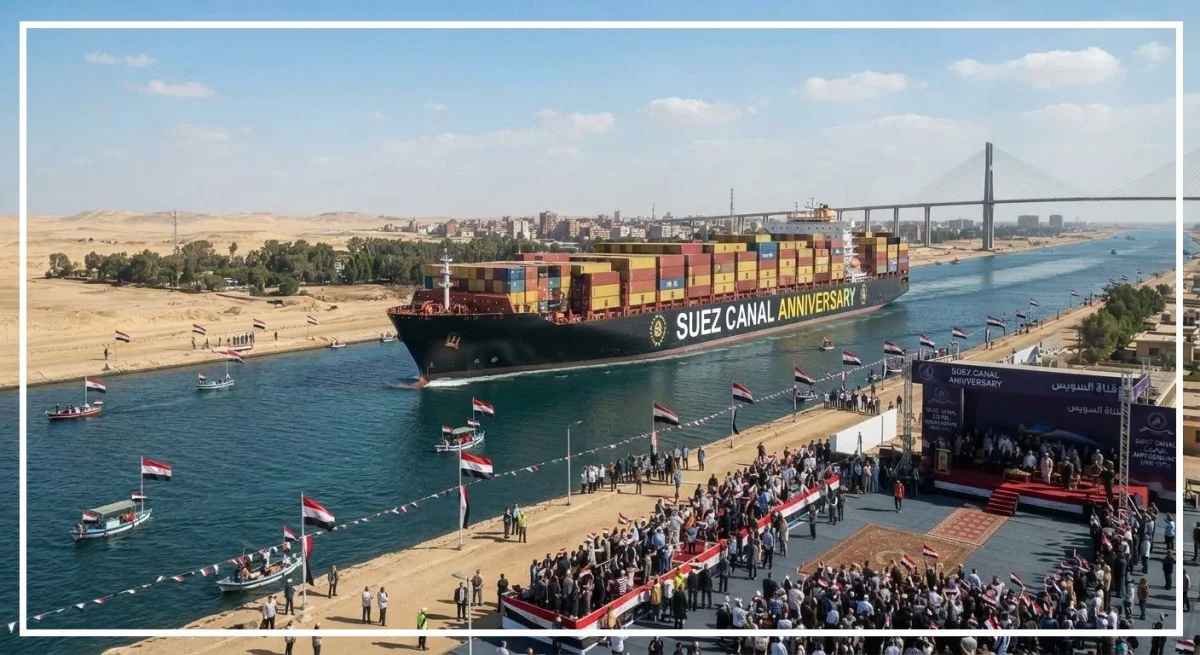
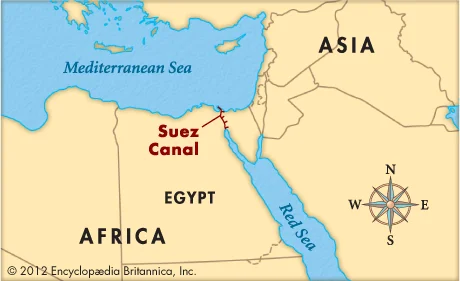
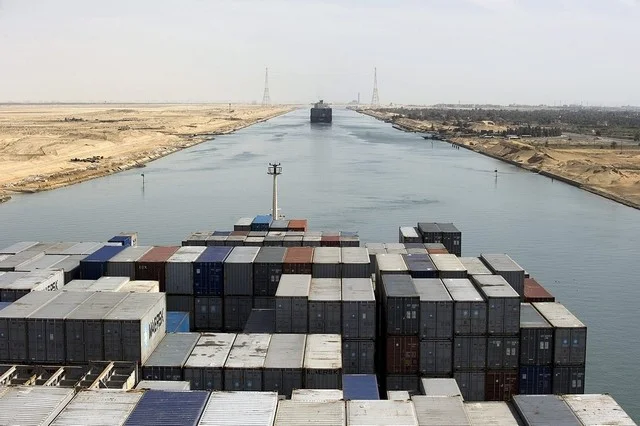
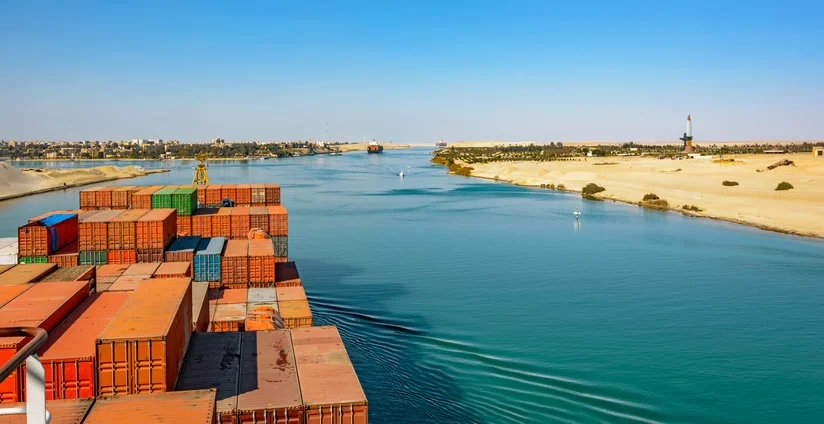
The Suez Canal’s opening on 17 November 1869 gave shipping between Europe and Asia a direct passage through Egypt, avoiding the long route around Africa. At 102 miles (164 kilometers), the sea-level waterway changed the distance calculation for ocean carriers and helped make the Mediterranean and Red Sea a continuous maritime corridor.
For shippers, the significance was practical: a shorter route meant fewer miles at sea and less time spent on a voyage between major trading regions. The canal did not remove the need to plan for transit, but it changed the geography around which schedules, ship movements and commercial connections could be organized. Its opening marked a major shift in the options available to international shipping.
Construction combined mass labor and machinery
French diplomat Ferdinand de Lesseps secured a concession from Egypt’s ruler, Sa'īd Pasha, in 1854 and established the Suez Canal Company to finance and carry out the project. Work began in 1859 and continued for ten years, amid broad interest in whether a navigable passage could be built across the isthmus.
Thousands of Egyptian fellahin, or peasants, initially dug the canal under the corvée system of forced labor. The harsh working conditions drew international criticism. After the corvée was banned in 1863, the company shifted toward steam-powered dredgers and excavators. Mechanized digging accelerated the removal of earth and rock on a scale that manual labor alone could not match.
The change in equipment was central to the construction effort: dredgers could excavate and clear material continuously, helping the project advance through a vast engineering task. The canal’s eventual operation depended on that excavation producing a navigable waterway at sea level. The project also showed how industrial machinery could alter the routes ships used to connect continents.
Opening celebrations put the route on display
Khedive Isma'il Pasha hosted a multi-day inauguration attended by European royalty and dignitaries, including Empress Eugénie of France. Religious blessings preceded a procession of vessels through the new passage. The French imperial yacht L'Aigle, carrying Eugénie, led the first convoy, turning the inaugural transit into a public demonstration of the canal’s purpose: linking waters and trade routes that had previously required a much longer voyage.
The ceremony was lavish, but the lasting measure of the opening was operational. Ships could now pass from the Mediterranean toward the Red Sea without sailing around the Cape of Good Hope. The route cut thousands of miles from the maritime distance between London and Bombay, strengthening the commercial connection between Britain and India and other parts of Asia.
A shorter route became a major trade corridor
The Suez Canal Company had French and Egyptian shareholders, and questions over control of the waterway were expected to remain significant for decades. For shipping businesses, the more immediate change was the passage’s effect on distance and transit time. A shorter voyage can reduce time at sea and related transport costs, while concentrating traffic on a narrower route that must be managed and kept navigable.
The canal connects the Mediterranean Sea with the Red Sea and, through it, the Indian Ocean. It provides the most direct maritime link between Europe and Asia, as well as access between the Mediterranean and trade routes serving East Africa. The route is described as carrying over 12% of global trade by volume, including a substantial share of oil and natural gas shipments. That traffic makes canal access relevant to cargo owners and carriers well beyond the ports at either end.
Its role also makes interruptions consequential for voyage planning. The canal was closed to shipping during the Suez Crises of 1956–57 and during the Arab-Israeli conflicts of 1967 and 1973. Those closures underline how a route that saves substantial distance can also concentrate movements through a single passage: when ships cannot transit, carriers must account for a longer alternative around southern Africa.
Expansion and traffic show the canal’s continuing role
More than a century after the opening, the waterway was still handling large volumes of traffic. In 2008, more than 21,000 ships transited the canal, generating over $5 billion in tolls for Egypt. Those figures show the scale of the operation at that time, while also illustrating how canal use links shipping activity with income from transit fees.
A second lane was completed and placed into service on 6 August 2015. Adding a lane can support traffic flow by allowing more movement through parts of the canal system, though individual voyages still depend on passage arrangements and vessel requirements. For fleet and cargo planners, canal capacity and availability remain part of deciding how to route ships and build schedules.
The Suez Canal’s importance rests on a straightforward operating advantage: it saves ships thousands of miles and weeks compared with sailing around the Cape of Good Hope. Its history also shows why route choice involves more than distance alone. The canal’s condition, access and traffic arrangements shape whether that shorter passage can deliver its expected time and cost benefits. Since 1869, it has remained a defining link between Europe, Asia and the wider ocean network.