Tuesday, October 13, 2026 · Ocean Shipping & Ports
Modular Storage and Robotics Shape Barrett’s 3PL Warehouse in Texas
Noted by Christopher Smith · 660 reads
Barrett’s Forney warehouse pairs reconfigurable storage with mobile robots to handle changing product sizes and picking workflows.
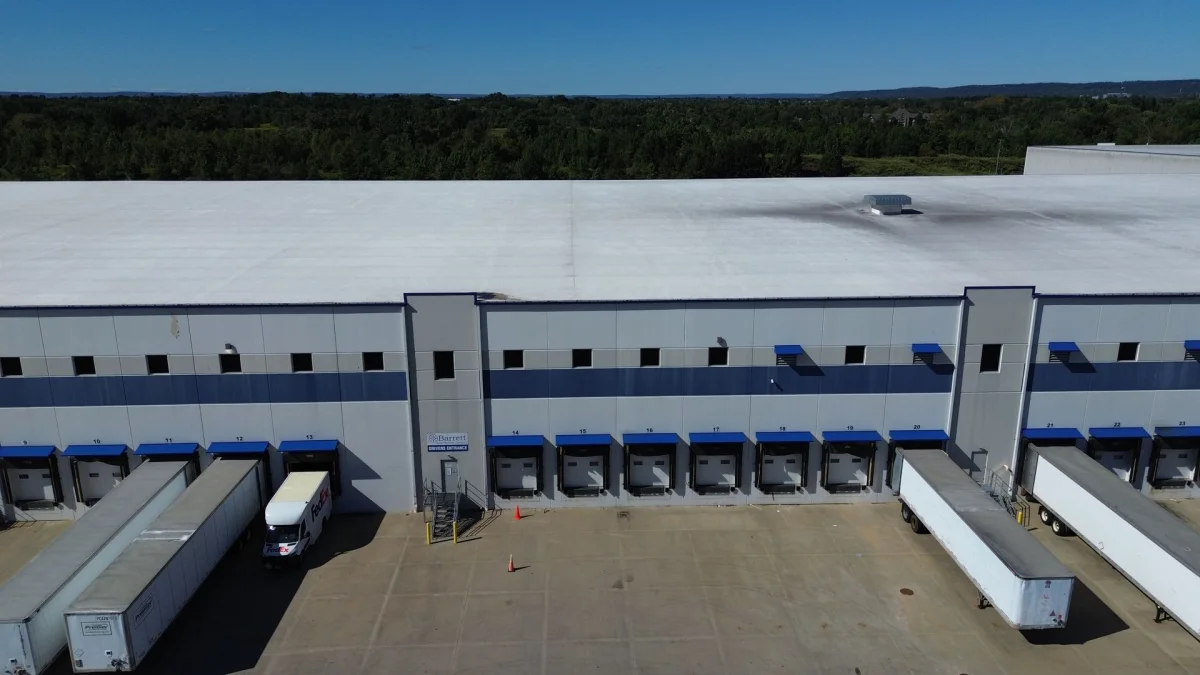
For brands with changing product ranges, a warehouse’s ability to adjust its storage can matter as much as its total floor area. At Barrett Distribution Centers’ 550,000-square-foot facility in Forney, Texas, modular shelving and autonomous mobile robots support an operation designed to handle different product sizes and fulfillment tasks.
A walkthrough with Kevin Lawton of The New Warehouse showed how the facility combines Pallite PIX modular storage with Locus Robotics mobile robots. The practical question for a brand assessing a third-party logistics provider is how those systems respond when the items in storage, or the way workers pick them, change.
Storage that can change with the products
A collection might include small accessories alongside jackets or handbags. If every item has to fit into fixed-size locations, a shift in product mix can leave some space poorly matched to the inventory and make other items harder to store. Reworking a rigid setup can take time and disrupt the processes built around it.
Barrett’s PIX units use a standard configuration with 28 individual locations. Their shelves can be removed or repositioned to create larger compartments. During the Forney walkthrough, Lawton pointed out units modified to hold handbags and bulkier jackets. The facility could make room for those products by changing the storage arrangement instead of replacing the full structure.
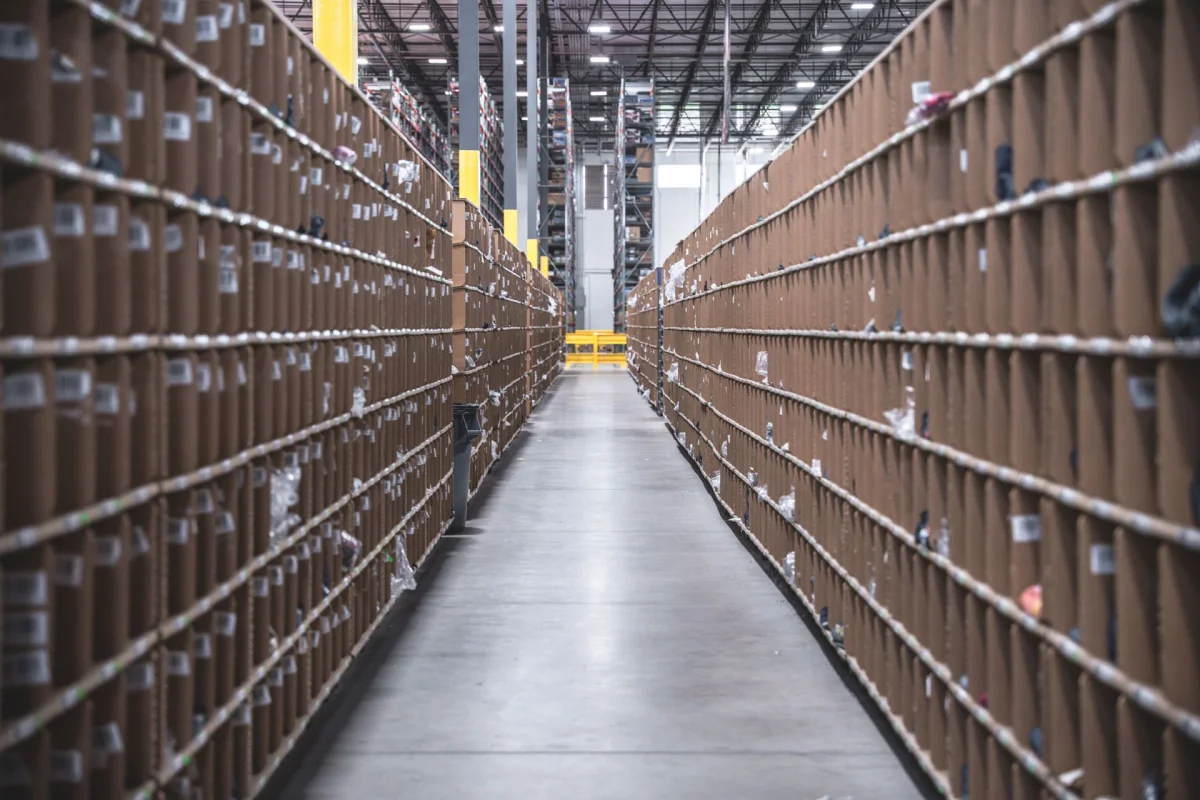
That adjustability is relevant for businesses whose inventory varies across seasons or collections. A layout suited to one group of products may not suit the next. Movable shelves give warehouse teams another way to adapt the available locations as product dimensions change. The source describes the equipment’s configuration and use; it provides no figures on picking speed, storage density or labor savings.
Robots and picking equipment work together
Locus autonomous mobile robots travel through the Forney facility to assist associates with picking and putaway. In the setup shown, the robots work alongside the modular storage system as inventory moves through fulfillment. Their role is part of a broader workflow involving workers, storage locations and the equipment used to collect and handle products.
The facility also uses Pallite bin inserts designed to fit both manual picking carts and Locus robots. Each insert has six compartments, giving associates a way to keep products organized across those workflows. Using compatible bins on carts and robots can help maintain a consistent approach to handling items as the work moves between equipment.
For operators considering similar systems, the arrangement makes compatibility a concrete point to examine. Storage, containers, carts and robots all have to fit the tasks and products being handled. Equipment that works across more than one picking method can give a warehouse options as workflows or inventory needs shift. The walkthrough establishes how these components are used at Forney, but does not report a measured comparison with another setup.
Capacity is only part of a warehouse assessment
The 550,000-square-foot facility gives Barrett substantial room for its operation, but square footage alone says little about how effectively space can accommodate different products. The Forney example puts the focus on details that are easier to overlook during a facility review: whether storage locations can be resized, whether picking equipment can work with robots, and whether the layout can be adjusted without extensive structural work.
The PIX units arrive flat-packed and can be assembled or reconfigured without the extensive work associated with conventional fixed shelving, the source says. Lawton also observed units that had reportedly remained in service for about two years in the Texas climate. That observation offers a limited look at their time in use; it does not provide a broader durability assessment or maintenance record.
For brands comparing 3PL operations, the useful takeaway is to ask how the warehouse handles a change in product dimensions and how workers move orders through the facility. A tour can show whether shelves can be repositioned, which containers fit the picking equipment and how robots support associates. These operating details help explain what a stated capacity means in practice.
Barrett’s Forney facility shows one approach: pair adjustable storage with mobile robots and bins intended for both manual and robotic picking. For a brand whose assortment is changing, the key consideration is whether the provider’s space and equipment can accommodate the next set of products without forcing a full redesign of the operation.