Thursday, October 1, 2026 · Ocean Shipping & Ports
How Barrett Distribution Connects Warehousing and Transportation for Faster Shipping
Noted by Robert Brown · 364 reads
Barrett combines a multi-state facility network, warehouse systems, inventory reporting and transportation management to coordinate B2B and consumer orders.
Shipping speed depends on more than the time it takes to pick an order. Inventory must be in a useful location, warehouse teams need to process each order correctly, and outbound transportation has to be coordinated with the fulfillment operation. Barrett Distribution brings those pieces together across a national network of facilities, warehouse technology, inventory visibility and transportation management.
For brands selling through several channels, that connected approach can help organize distinct workflows within one logistics operation. Barrett handles business-to-business orders as well as business-to-consumer and direct-to-consumer fulfillment. The actual delivery timeline still depends on details such as inventory placement, order timing, destination and carrier service.
Facility locations shape the shipping plan
How far an order travels can depend on where the inventory is stored. Barrett operates distribution and fulfillment locations in Massachusetts, New Jersey, New York, Maryland, Virginia, Tennessee, Texas and California. That geographic spread gives brands options when planning where to hold stock in relation to their customers and distribution needs.
A network of facilities can make it possible to consider different inventory placements for customers in different regions. That decision has to fit the brand’s wider operating plan: where demand comes from, how orders are fulfilled and which shipping services are available. The source information does not specify delivery-time reductions or inventory allocations by location, so the footprint is best understood as a set of choices for distribution planning rather than a guaranteed transit outcome.
For shippers, the operational question is whether the chosen inventory position can serve the relevant orders efficiently. A warehouse location alone cannot move an order faster if the required item is unavailable there or if the order arrives after the applicable processing window.
Warehouse systems coordinate order work
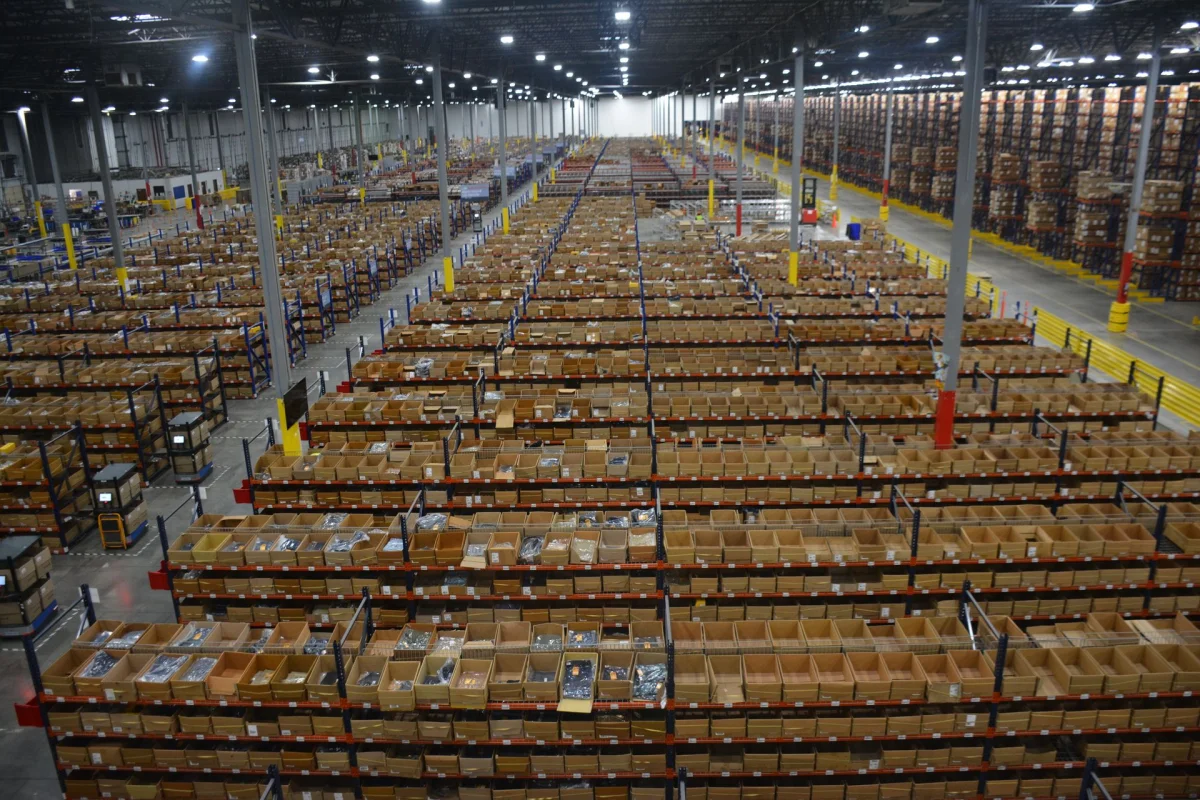
Once an order is ready for fulfillment, warehouse processes affect how quickly it can move from receipt to dispatch. Barrett’s warehouse management capabilities include real-time tasking, customer-specific processing, multi-client functionality and flexible radio-frequency technology. These tools help coordinate activity as orders progress through the facility.
Customer-specific processing matters when brands have different fulfillment requirements. A warehouse handling orders for multiple clients needs ways to direct work according to each operation’s processes. Real-time tasking can help organize activity as it develops, while radio-frequency technology supports warehouse work. The available information does not detail particular automation equipment or describe how tasks are assigned, so the practical setup will depend on the operation.
Barrett also uses automation and analytics within its technology environment. In a fulfillment operation, those capabilities can contribute to operational efficiency and visibility, while the warehouse systems provide a structure for managing order work. The key point for shippers is that speed begins inside the facility: processing must keep pace with order requirements before outbound transportation can take over.
Inventory information helps teams monitor fulfillment
Warehouse placement is useful only when the right stock is available to fulfill an order. Barrett gives customers secure online access to information on inventory, item master data, inbound orders and outbound orders, along with operational reporting. This view helps brands follow activity across their fulfillment operation and see what is happening with stock and orders.
Barrett’s reporting tracks order cycle time, fill rate and on-time fulfillment. Its operational metrics also include inventory accuracy and dock-to-stock performance. Each measure reflects a different part of the process: order cycle time follows order processing, fill rate records how completely orders are supplied, and dock-to-stock performance tracks the handling of inbound goods. Together, the measures give teams ways to review fulfillment performance and identify where more attention may be needed.
That reporting is useful for managing an operation, but the figures do not by themselves establish a delivery promise. Brands still need to consider order timing, inventory availability, the destination and the selected carrier service when assessing what a customer can expect.
Transportation management links dispatch with delivery
Fulfillment does not end when a package or shipment leaves the warehouse. Barrett’s transportation capabilities cover carrier rates and transit information, tracking, inbound and outbound management, and other shipment-related activities. Linking transportation management with warehouse fulfillment can help coordinate the handoff from order processing to shipment.
Carrier and transit information gives teams relevant details for managing shipments, while tracking offers a way to follow their progress. Inbound and outbound management address transportation at both ends of the flow: goods arriving for storage and orders leaving for customers or other recipients. The source does not name specific carriers, services or transit-time commitments.
One operation can handle different order channels
Barrett’s omnichannel fulfillment covers B2B and B2C activity. A direct-to-consumer ecommerce order may call for individual pick-and-pack work. An order for a retailer, distributor or other business can require different preparation and shipping steps. Barrett’s stated capability is to manage these workflows according to the needs of the customer and sales channel.
For brands using more than one sales channel, that flexibility can bring different order types into a broader logistics operation. The details still matter: each channel may have its own order handling and shipping requirements. Barrett’s combination of warehouse processes, inventory information and transportation management provides the operational pieces described for coordinating those flows.
Performance review and continuous improvement
Barrett uses reporting and analytics to track fulfillment measures, including on-time fulfillment, order cycle time, fill rate, inventory accuracy and dock-to-stock performance. The company’s continuous-improvement approach also includes documented processes, training, root-cause analysis and ongoing operational optimization.
Those practices give teams a way to review how work is progressing and examine process issues. For a shipper evaluating fulfillment performance, the practical takeaway is to look at the full sequence: where inventory is held, how orders are processed, what the reporting shows and how outbound transportation is managed. Shipping speed emerges from those connected decisions, while each order’s delivery still depends on its inventory position, timing, carrier service and destination.