Friday, November 6, 2026 · Ocean Shipping & Ports
Ryder Adds Six East Coast Sites and 1,200 Vehicles to FMS Network
Noted by John Kingston · 871 reads
Efficiency Enterprises adds six locations, about 1,200 vehicles and an estimated $50 million in gross revenue to Ryder’s FMS business next year.
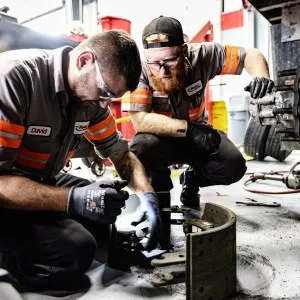
Ryder is adding six East Coast locations and about 1,200 vehicles to its Fleet Management Solutions (FMS) network through its purchase of Efficiency Enterprises. The deal brings an established fleet leasing and maintenance operation into Ryder’s existing footprint, with sites in Florida, New York, Maryland and Delaware.
Efficiency Enterprises has locations in Orlando, Tampa and Fort Myers, Florida; Astoria in Queens, New York; Baltimore; and Middletown, Delaware. Its fleet includes about 900 power units. Ryder said the added sites will expand its capacity and service coverage in those markets.
The acquired company provides fleet management, maintenance and leasing for trucks, trailers and material handling equipment. That mix closely matches FMS, Ryder’s rental and leasing business. The practical addition is a combination of operating locations, vehicles, technicians and customer relationships that Ryder can fold into its existing network.
Modest revenue contribution, broader network reach
Ryder did not disclose the purchase price. It expects Efficiency Enterprises to contribute about $50 million in gross revenue to FMS next year and to add incremental earnings growth.
That contribution is small beside FMS’s existing scale. The unit reported approximately $4.6 billion in revenue through the first nine months of the year. The figures put the deal’s financial size in perspective: its more immediate appeal appears to be the operating capacity and local coverage attached to the business.
Asked why Ryder chose to buy an existing operation instead of building capacity itself, a company spokesman pointed to its locations, customers, assets and experienced technicians. The spokesman said these resources complement Ryder’s FMS network and give it more capacity to support customers in transportation and distribution markets.
For fleet customers, the sites and maintenance workforce are the most concrete parts of that case. Existing facilities and technicians can extend service coverage in markets where Ryder wants more capacity; established customer relationships give the company an operating base to add to its network. The source did not specify how Ryder will integrate the locations or whether customers will see changes to service arrangements.
A different fit from Ryder’s prior purchase
This is Ryder’s second FMS addition through a purchase in three years. In 2024, Ryder bought Pit Stop Fleet Services, which brought in approximately $24 million in revenue. Ryder described that deal as an expansion of Torque by Ryder, its retail mobile maintenance business, and its geographic reach.
Efficiency Enterprises serves a broader role, according to the spokesman. While the earlier purchase centered on mobile maintenance, this one adds a mix of leasing, maintenance, customer relationships, vehicles and physical locations to the FMS network. Ryder highlighted Efficiency Enterprises’ maintenance work in describing the business, but the spokesman said maintenance was not the main target in the same way it was for Pit Stop.
The distinction matters because the two purchases add different kinds of operating capability. Mobile maintenance can extend repair support to customers beyond fixed facilities. Efficiency Enterprises brings sites and fleet assets along with leasing operations, giving Ryder additional physical presence in several established logistics markets.
FMS remains a large part of Ryder’s business
Ryder has been working to reduce the share of company revenue generated by FMS. The unit represented 56% of Ryder’s business in 2018 and 40% in the most recent quarter cited in the company’s third-quarter earnings presentation. Even as that share has declined, the latest purchase adds capacity to the fleet business rather than shifting Ryder’s activity into another segment.
Ryder said the purchase supports its focus on capacity, service coverage and customer growth in industrial and distribution regions. The company has not disclosed a timetable for integrating the six sites or given a breakdown of the acquired fleet by vehicle type beyond the approximately 900 power units. For now, the measurable additions are the locations, the roughly 1,200 vehicles and the expected $50 million in gross revenue next year.
How much the new footprint contributes will depend on how Ryder combines those assets and operations with its existing network. The deal gives FMS an established presence in several East Coast markets; the next indicator will be how that added capacity translates into customer support and earnings.