Monday, November 9, 2026 · Trucking & Freight
Port Klang Handles Record 15.14 Million TEUs as Strait Traffic Rises
Noted by Tamishra · 933 reads
Port Klang’s volumes are climbing as Malacca traffic grows. Capacity plans, carrier shifts and routing risks matter to forwarders.
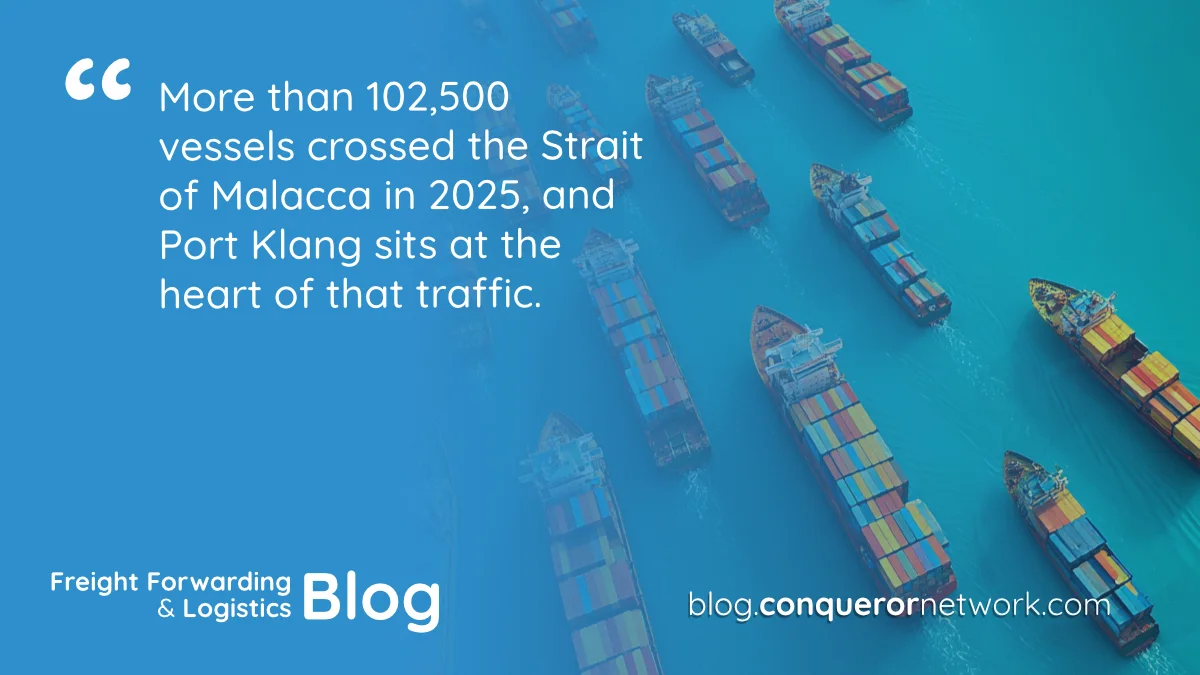
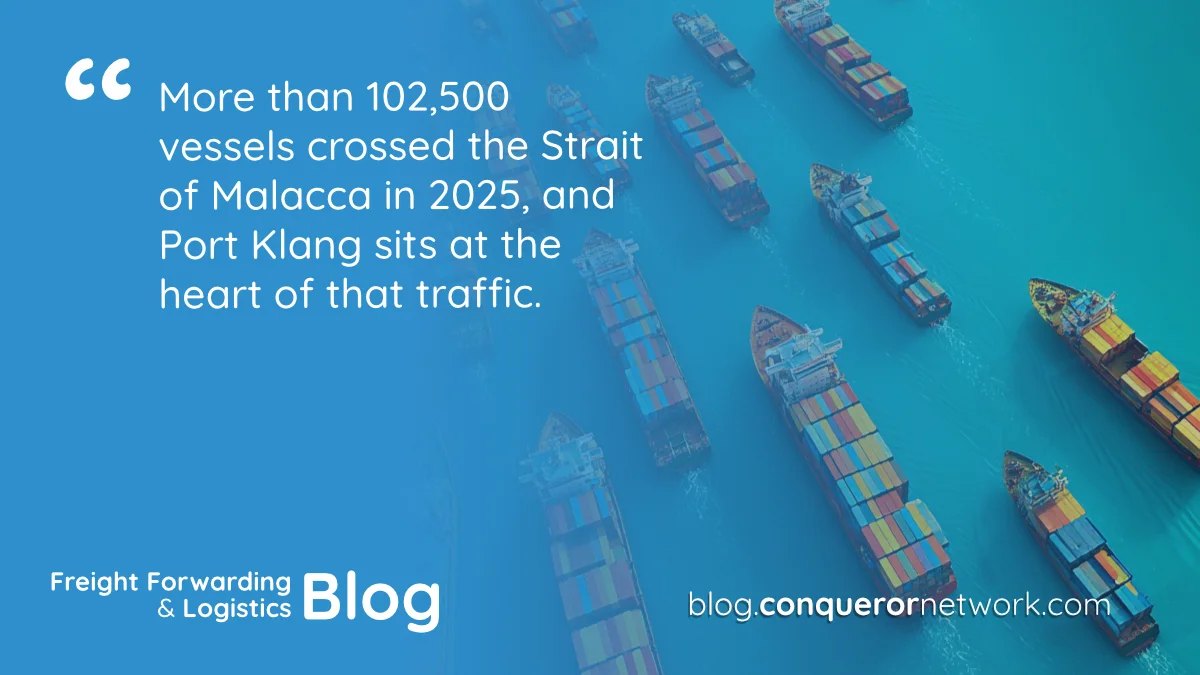
Port Klang is handling more cargo as traffic through the Strait of Malacca rises, putting capacity and schedule reliability in focus for freight forwarders serving Asia. The Malaysian port recorded a record 15.14 million TEUs in 2025, while more than 102,500 vessels transited the strait. Disruptions elsewhere have added pressure to the corridor, making flexible routings and dependable destination partners practical priorities.
Rising traffic meets a busy corridor
Malaysian data shows that vessel transits through the Strait of Malacca climbed from about 94,300 in 2024 to more than 102,500 in 2025. The waterway also carries roughly 75% of China’s seaborne crude imports, underscoring its importance to cargo and energy flows between Europe, the Middle East, India and East Asia.
Disruption in the Strait of Hormuz and the Red Sea has redirected vessels towards Southeast Asia. Malaysian shipowners report spillover pressure on Malacca traffic, although Malaysian ports have so far managed congestion. The implication for operators is that conditions along the route can shift with developments far beyond the strait itself. Delays and schedule changes may affect connecting services, so forwarders need to monitor vessel plans and allow room for routing adjustments.
Security is another operating consideration. Regional monitors recorded at least 104 piracy and armed robbery incidents in 2025, though reported cases declined in early 2026. For cargo planners, the strait remains both a major trade artery and a source of possible transit, schedule and insurance complications.
Port Klang’s throughput and appeal
Port Klang comprises the Westports and Northport terminals. Its 2025 total of 15.14 million TEUs was 3.4% higher than the 14.64 million TEUs handled in 2024, placing it tenth among the world’s container ports. Northport accounted for 3.8 million TEUs of the 2025 total.
Growth continued into 2026. First-quarter throughput rose 5.2% year on year to 3.71 million TEUs. In the first five months, the port handled 6.38 million TEUs, a 5.4% increase from the same period a year earlier. Port Klang’s full-year target is 15.37 million TEUs.
Location and services help explain the port’s draw. It has deep-water berths for large vessels and sits near Kuala Lumpur’s business and logistics services. The Port Klang Free Zone provides additional capacity for value-added logistics; cargo throughput there increased 14.9% in the first quarter of 2026.
Carrier choices and capacity constraints
Recent service changes point to Port Klang’s growing role in regional networks. The Gemini Cooperation increased transhipment at Westports from February 2025. In April, Evergreen shifted two services from Tanjung Pelepas to Port Klang. Tailwind Shipping Lines chose Northport as its regional hub for intra-Asia trade.
Those decisions bring more activity, but available terminal capacity is already a consideration: Westports was operating at roughly 82% of capacity. Planned expansion will therefore shape how much additional cargo the port can accommodate over the coming years.
Expansion plans and timing
Westports 2 is intended to extend the terminal from CT9 to CT17 and lift capacity towards 28 million TEUs. The Westports concession has been extended to 2070 for CT10 to CT13. Further out, Port Klang Terminal 3 on Carey Island is planned as a phased development over 20 years. Earlier project timelines have shifted, so forwarders should treat dates for that development as indicative.
For shippers and forwarders, the practical task is to track Westports 2 milestones and assess how new capacity may affect routing and terminal choices. Port Klang’s throughput is rising today; longer-term plans add room for growth, but their delivery schedules matter when planning future volumes.
Building reliable connections around the port
Port capacity is only one part of a shipment’s performance. Forwarders also need trusted partners at the other end of each movement, particularly when traffic conditions change or a routing needs adjustment. The Conqueror Freight Network says it selects one freight forwarder in each of 472 main ports and airports, with members covering 251 cities in 140 countries.
Its structure is built around exclusive local representation and members’ use of one another for a growing share of shipments. The network says members can receive routed cargo, freehands and sales leads. It also describes screening members for financial strength, creditworthiness and reputation, with network rules and a payment protection scheme addressing late payment and non-payment linked to bankruptcy or closure.
Members can combine their volume when negotiating rates with airlines, shipping lines and insurers, and can pursue larger contracts together. The network also offers FreightViewer, a quoting tool, and lists digital services including Redkik cargo insurance and a 10% discount on Container xChange services. These are commercial options for forwarders to assess against their own needs and existing arrangements.
Kuala Lumpur meeting in May 2027
The network’s 13th Annual Meeting is scheduled for 17–19 May 2027 at the Shangri-La Kuala Lumpur. The event is expected to bring together more than 130 independent freight forwarders from over 100 countries. Its programme includes pre-scheduled one-to-one meetings, with up to 32 sessions for members to meet selected business counterparts.
Social events include a welcome cocktail reception, networking lunches and a gala dinner. An optional trip on 17 May is planned to include Batu Caves, the Petronas Twin Towers and other Kuala Lumpur landmarks. Members who register before 29 January 2027 are eligible for the early bird discount; attendance is described as a core part of membership. The meeting offers participants a chance to hold partner discussions in the same city as one of Asia’s major trade hubs.
What to watch
Forwarders routing cargo through the region should build flexibility into Asia services, follow how disruption in the Strait of Hormuz and the Red Sea affects Malacca traffic, and monitor capacity expansion at Westports. With traffic and port volumes rising, dependable contacts at both ends of a shipment can help teams respond when schedules change.
Conqueror Freight Network details | Schedule a call with the network team | Kuala Lumpur 2027 meeting information | Membership information