Saturday, November 7, 2026 · Ocean Shipping & Ports
Edmund Fitzgerald sank in Lake Superior during 1975 storm
Noted by maritimecyprus · 383 reads
The 729-foot ore carrier sank on Nov. 10, 1975, with 29 crew aboard. Its final voyage still informs how operators assess Great Lakes hazards.
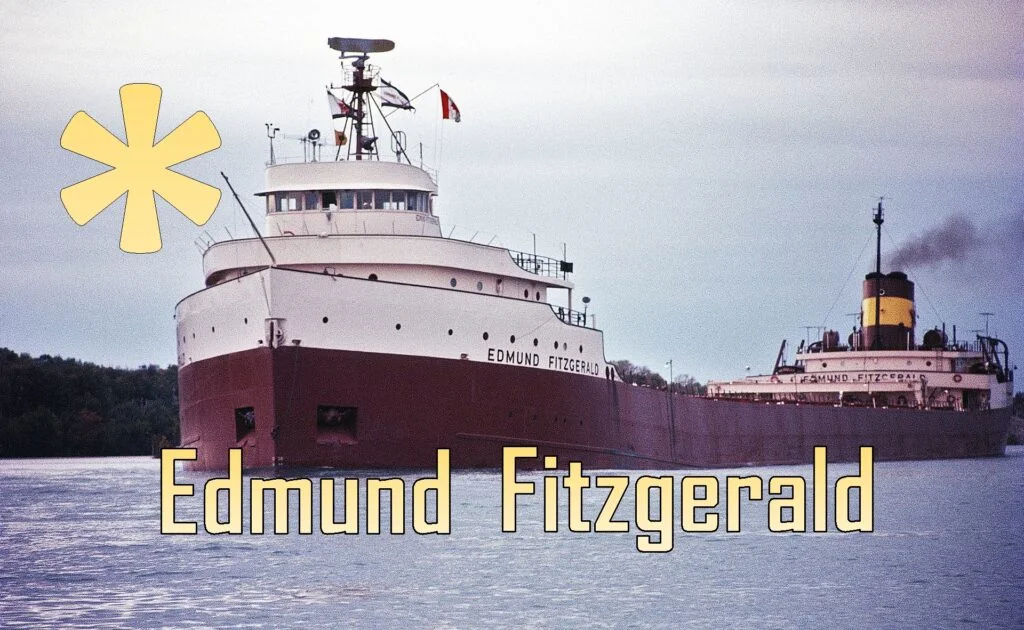
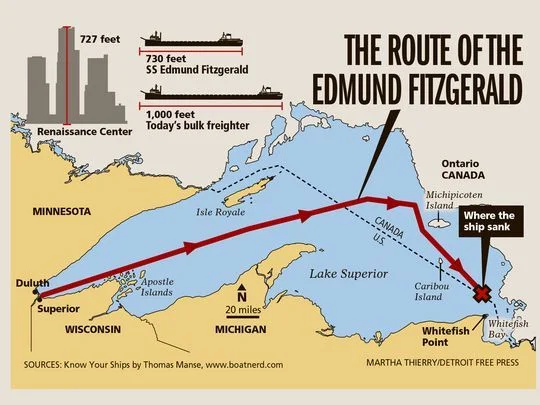
The sinking of the Edmund Fitzgerald on Lake Superior remains a stark example of how a severe storm can overwhelm a large, experienced vessel. The 729-foot carrier went down on Nov. 10, 1975, taking all 29 crew members with it. It had been hauling 26,116 tons of taconite iron ore pellets from Superior, Wisconsin, toward a steel mill near Detroit.
The ship had spent 17 years in service and was among the largest vessels operating on the Great Lakes. Its route linked an ore-loading port with steelmaking facilities to the south, carrying a cargo central to the region’s industrial supply chain. On its final trip, the Fitzgerald sailed alongside the Arthur M. Anderson, another freighter crossing the lake.
A crossing in worsening weather
The Edmund Fitzgerald left port on Nov. 9 under Captain Ernest M. McSorley. By the next morning, a powerful autumn storm had settled over Lake Superior. The conditions described in accounts of the voyage included winds gusting to 70–75 knots, waves reaching 25 to 35 feet, heavy snow and spray that cut visibility.
Those conditions created a difficult operating picture for a vessel carrying a heavy bulk cargo. The ship’s two radar units were reported out of service by mid-afternoon, reducing the crew’s ability to rely on onboard equipment as visibility deteriorated. At the same time, McSorley reported damage to the Anderson: railings were down, vents on deck had been damaged, and the ship was listing.
The Fitzgerald continued toward the relative shelter of Whitefish Bay, Michigan. The storm’s severity left little margin for correcting course or responding to further damage. The source account describes waves exceeding 30 feet and winds of hurricane force during the final stretch. For operators on the Great Lakes, the episode illustrates the compounding demands of maintaining visibility, monitoring a vessel’s condition and managing a loaded ship in heavy seas.
Last contact and sinking
At 7:10 p.m. on Nov. 10, the Arthur M. Anderson contacted the Fitzgerald to ask about its progress. McSorley replied, “We are holding our own.” Minutes later, around 7:15 p.m., the Fitzgerald disappeared from the Anderson’s radar. The vessel sank without sending an SOS signal, and its lifeboats were not deployed. None of the 29 people aboard survived.
The loss came quickly, leaving no survivors who could explain what happened aboard. The ship’s final position and the storm conditions have informed later attempts to understand the sinking, but the physical cause remains disputed. That uncertainty matters: the possible explanations point to different ways a vessel might be overwhelmed, from water entering the cargo space to damage to the hull.
Several explanations remain in discussion
One explanation centers on the hatch covers. The source describes a theory that covers that were faulty or not secured correctly may have allowed water to enter the cargo hold over time. As water accumulated, the ship could have lost buoyancy until the bow went under. This account links the ship’s vulnerability to the condition and closure of the cargo-space covers.
A second possibility is that the vessel struck shallow bottom near Caribou Island during the low-visibility crossing. Under that theory, contact with the lakebed damaged the lower hull before the ship reached deeper water. The severe weather and limited visibility are relevant to this possibility, though the source does not establish grounding as the cause.
A third theory combines structural strain with unusually large waves. The Fitzgerald’s length may have left it spanning wave crests in a way that placed exceptional stress on its ore-laden middle section. The hull may then have failed under the combined load. The source presents this as a theory, alongside the hatch-cover and grounding explanations; none resolves the cause beyond dispute.
A lasting reference for Great Lakes shipping
The sinking brought changes to commercial shipping practices on the Great Lakes. The source identifies survival suits, improved depth-charting and upgraded radar systems among the measures that followed. Each addresses a different part of the operating challenge: crew survival, awareness of underwater hazards and the ability to navigate when conditions reduce visibility.
The event also entered popular culture through Gordon Lightfoot’s 1976 song, “The Wreck of the Edmund Fitzgerald.” The song helped keep the ship and its crew in public memory, while maritime accounts continue to focus on the vessel, its cargo, the storm and the unresolved questions surrounding its final hours.
Watch the documentary
For ship operators and cargo interests, the practical takeaway is the way several risks converged on one crossing: a heavy load, worsening weather, damaged equipment and falling visibility. The Edmund Fitzgerald’s final voyage remains a reminder that conditions and vessel status can change faster than a schedule allows, especially on an exposed inland waterway.
More maritime history is available in the MaritimeCyprus history archive.
The original account appeared on MaritimeCyprus.